Behavioral Economics in the Age of Sportsbooks
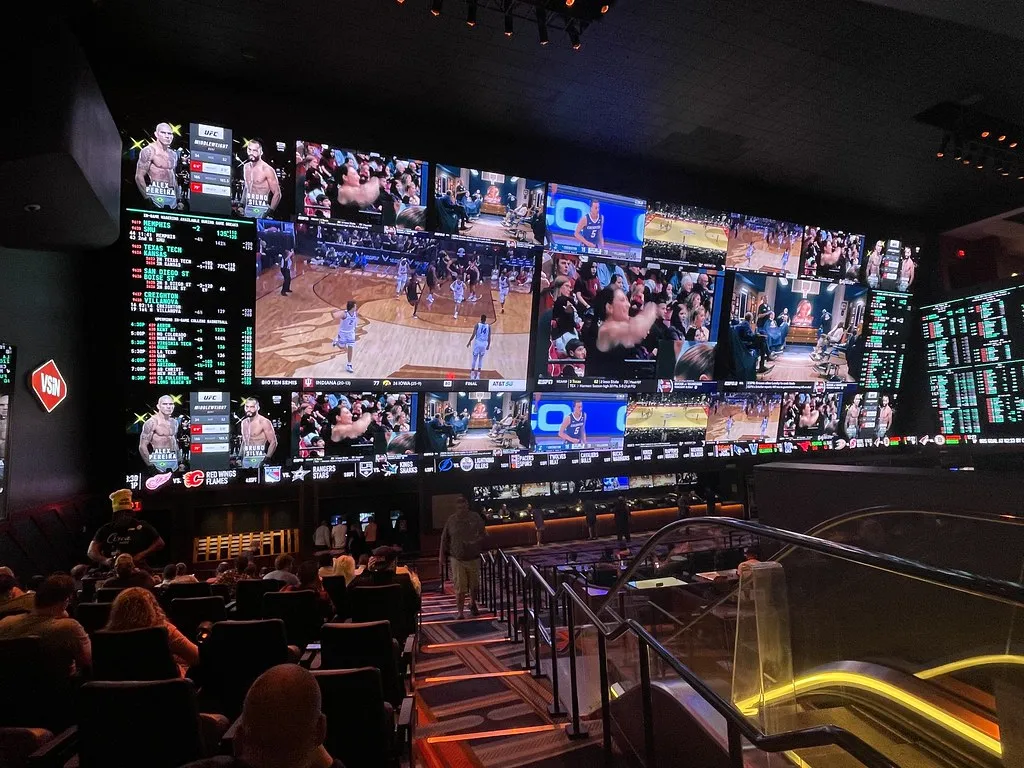
Sports betting dates back to gladiatorial battles and chariot races in the ancient Olympic Games, as far back as 776 BCE. Gambling itself likely predates recorded history: the casting of lots (from which the word “lottery” is derived) is referenced in both the Old and New Testaments of the Bible. Over thousands of years, sports betting has persisted despite periodic bans and moral objections, and is now one of the fastest-growing industries in many developed economies worldwide.
Although the tools behind betting have changed, the psychology has not. Today’s sportsbooks operate on a digital scale the ancients couldn’t imagine, yet they still rely on the same predictable human biases that have shaped gambling behavior since antiquity. Sports betting behavior consistently deviates from rational decision-making because bettors rely on cognitive biases—loss aversion, overconfidence, probability misperception—and sportsbooks intentionally design interfaces and incentives to exploit these predictable mistakes.
The rapid expansion of legal sports betting in the United States has brought with it a new language of “data-driven” decision-making. Sportsbooks market their products as skill-based and analytical, filled with real-time statistics, customizable markets, and sophisticated prediction tools. However, this market is shaped less by efficient pricing and more by human psychology.
Famed economist Steven D. Levitt documented that sportsbooks do not function like a financial market exchange; they set fixed odds or spreads, rarely adjust them, and accept the opposite side of nearly all wagers themselves. Levitt’s research explores straight bets on professional football games, which most commonly involve picking a winner of a game against a point spread. So, for example, if a team is favored by 3.5 points, you can bet on them to win by 4 or more points, or for the underdog to lose by less than 4, or outright win. In the case of a spread of a whole number, say 3, if the favored team wins by exactly 3, all wagers are returned.
In Levitt’s analysis of roughly 20,000 National Football League bets during the 2004 season, he found that in nearly half of the observed games, two-thirds of all money bets went on one side—most often the favorites or home teams—despite those bets losing more often than they won. By systematically skewing prices to attract biased bettors and avoiding line adjustments, bookmakers can secure profit margins 20–30% higher than under balanced-book pricing. What this means is that regardless of a bettor’s “skill,” the deck is subtly stacked to exploit predictable cognitive biases.
Although Levitt’s analysis is over two decades old, bookmakers still operate the same way. His analysis also proves that straight betting on point spreads, the fairest bets provided by sportsbooks, still provides the house a significant edge. Part of that edge is derived from the commission that sportsbooks take to equalize the probability of two events occurring; most commonly, one must wager 110 units to win 100 units, with the difference being paid to the house. Nonetheless, the vast majority of the house edge comes from their knowledge advantage.
Since 2004, the legalization and digitization of sportsbooks have given rise to a new and even more unfair type of bet: parlays. Parlays are a combination of bets that carry a small probability of winning but offer significantly larger payouts than straight bets.
A core insight from prospect theory is that people tend to overweight small probabilities. In fact, the creators of prospect theory themselves, Daniel Kahneman and Amos Tversky, state, “Overweighting of low probabilities may contribute to the attractiveness of both insurance and gambling.” In the world of sports betting, this encourages widespread fascination with longshot parlays offering potential life-changing payouts. Even when the true probability is extremely low, the emotional appeal of a big win pushes bettors away from rational expected value.
Cognitive biases deepen these errors. The gambler’s fallacy leads bettors to rely on trends without accounting for the multitude of other factors that influence sporting outcomes. For example, despite each event being independent, bettors often assume that a hot streak will continue or that a losing run is due for a reversal. Overconfidence compounds this problem: bettors regularly believe they possess an informational edge based on surface-level statistics or personal intuition. Levitt’s research shows that the prevalence of these behavioral distortions is what causes gambling markets to diverge from the efficiency seen in financial markets.
Another key component of prospect theory is loss aversion. Loss aversion is a cognitive bias in which the pain of a loss is felt more intensely than the pleasure of an equivalent gain. This bias is a direct cause of one of the most detrimental behaviors in gambling: chasing losses. With emotions running high after losses, bettors often dig an even deeper hole for themselves by shifting towards riskier bets or increasing their wager size in an attempt to “get even” despite negative expected value.
One way sportsbooks reinforce this psychology is through integrated features like early cash-out buttons. Although in some cases cashing out may be satisfactory for bettors, this feature does not operate on probabilistic logic and even further increases the house edge. A key driver of the feature is capitalizing on bettors’ fear of losing what they already consider “earned.” Hyperbolic discounting further drives bettors towards short-term excitement, even when long-run value is objectively worse.
The structure of sportsbook interfaces reflects a deep understanding of behavioral economics. Most bookmakers’ homepages are flooded with “trending bets” or enhanced odds promotions, which often carry steep odds minimums, nudging users towards impulsive wagers that further exploit their tendency to overweight low-probability events. These markets are strictly for entertainment value and are awarded almost daily to promote customer loyalty (i.e., increase wagering).
Sportsbook users' cognitive biases are exploited. It is impossible to tune into any major sporting event nowadays without being bombarded with ads for sportsbooks. These ads brilliantly attract customers by advertising hefty sign-up bonuses, featuring prominent celebrities, and integrating themselves into the live games. Sportsbooks take it even a step further on their social media pages by advertising longshot parlay cashes, whether real or not, where users seemingly turn a few dollars into tens or hundreds of thousands.
Sportsbooks do not succeed because bettors lack data. They succeed because human judgment bends in systematic ways toward misreading probabilities, loss aversion, and chasing emotional payoffs over rational ones. Although there are sophisticated bettors who model expected value, exploit mispriced lines, and manage risk with near-clinical detachment, the broader market remains dominated by predictable psychological patterns that ensure steady profitability. Behavioral economics explains why even informed bettors often fall short, and why, in the long run, the house really does always win.