The Importance of Handlingsregelen: Discipline For Lasting Wealth
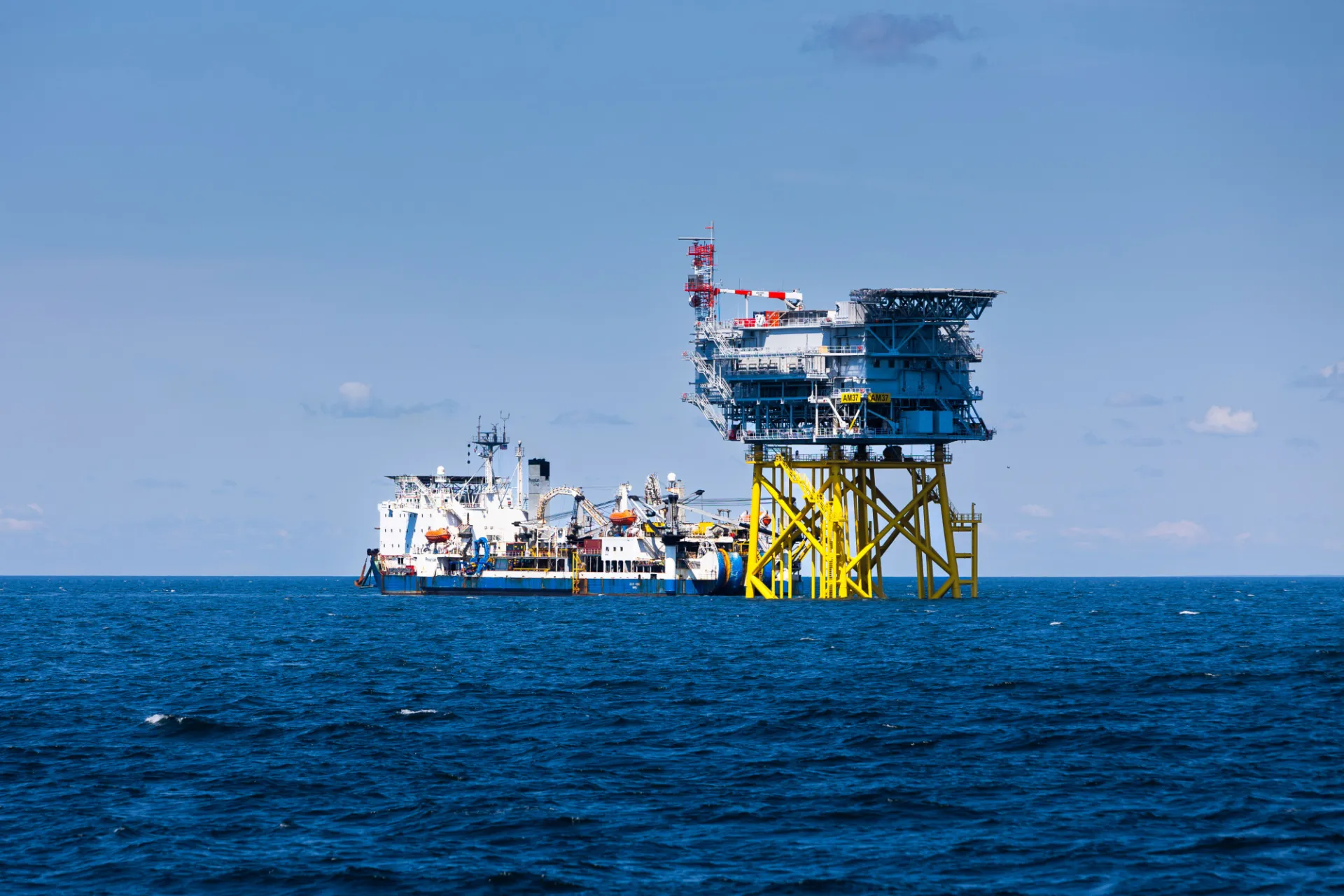
Today, Norway produces 2% of the world’s natural petroleum and 3% of its natural gas, making it the fourth largest exporter. Norway’s gas exports amount to more than 30% of the European Union (EU) and United Kingdom’s total gas consumption; domestically, oil and gas exports account for 57% of Norway’s 2025 export revenue. Norway’s petroleum activities have been significant in facilitating its economic growth and the creation of its strong welfare state.
In 1958, however, Norway’s Ministry of Foreign Affairs was instructed to discount the possibility of finding coal, oil, or sulfur on the Norwegian coast. The abundance of hydrocarbons in the North Sea was only realized in 1959, when a Dutch gas field was discovered. The Norwegian government acted quickly, avoiding early attempts by oil companies to control resources off of Norway's coast. Instead, the Norwegian government claimed control over the “Norwegian shelf,” an aquatic area that constitutes more than four times Norway’s land mass and about a third of the European continental shelf.
Oil production only truly began in 1971, at first with heavy presence from foreign companies. While Norwegian oil companies were slowly emerging and growing, the state asserted its influence, becoming the sole owner of the oil company Statoil. Beyond supporting Norwegian companies, the country ensured that it would have at least half of the claims of ownership interest in all production licenses.
In 1985, the State’s Direct Financial Interest (SDFI) was introduced to the petroleum industry. Under this system, the Norwegian government has some possession of the oil and gas pipelines, fields, and onshore facilities. Under the SDFI, the Norwegian government pays the costs for, and gets revenue from, a set proportion of oil fields. A state-managed company manages the finances for the government, while operation of the oil fields remains entirely in the hands of private companies. The question then becomes how Norway chooses to invest and use the capital — a decision made by the Government Pension Fund Global. The largest sovereign wealth fund in the world, its assets amount to about $2 trillion (as of early 2026) and it has ownership in roughly 1.5% of all publicly listed companies across the world. It invests in global companies such as Nvidia and Apple, while avoiding Norwegian companies to prevent inflation in their domestic economy.
“Dutch disease” refers to the negative effect of a spike in national income. With an increase in foreign currency influx, often resulting from the discovery of a natural resource, the appreciation of the local currency causes prices in other sectors to rise. The increase in prices across industries tarnishes the country’s ability to export other goods on the global market, leading to an economic shift toward the sector experiencing a boom at the expense of other sectors. Often the spike in demand is temporary and volatile, and the reduction in economic diversification reduces stability in the economy as a whole. Norway’s resource discovery could have easily resulted in the “Dutch disease,” but its commitment to investing into the well-being of its citizens and investing the money it receives abroad has allowed it to build wealth across its population. Norway’s Gini coefficient is 0.28, much lower than the United States’ 0.47.
Norway’s system is a model of responsibility – a stark contrast to the “resource curse” seen in other countries with large discoveries of natural resources. This “paradox of plenty” refers to the pattern seen in countries with an abundance of oil, gas, and minerals that fail to realize their economic potential. A common cause is irresponsible government spending during times of high revenue, failing to account for the volatile nature of natural resource markets. The governments of Nigeria, Mexico, and Venezuela have all faced debt crises when revenues fell in the 1980s. The resulting “boom and bust” cycle has led to companies going bankrupt.
Nigeria offers the starkest contrast. Oil accounts for 90% of Nigeria’s export value, and 9% of the country’s GDP. Between 1970 and 2001, Nigeria received $300 billion in oil windfalls (unexpected excess revenue). This drove up the value of its currency and led to strong increases in domestic prices: the real exchange rate appreciated 55% between 1974 and 1980. Corruption and governance failures meant that little of this wealth reached Nigerian citizens; nearly 54% of Nigerians lived on less than $1 a day. The Nigerian government spent oil revenue recklessly. When oil prices crashed in 1980, the country faced a debt crisis, and only finished repaying the $30 billion it owed in 2006. Though the countries tell a very different story, Nigeria and Norway discovered their oil reserves within 3 years of one another.
The resource curse has strong links to weak pre-existing democratic institutions. Norway’s pre-existing democratic institutions gave it an advantage, allowing it to regulate the petroleum industry and avoid corruption. Rather than concentrating power, oil wealth has been managed remarkably transparently. With its investments in 9,300 companies across 70 countries, the Government Pension Fund Global (GPFG) has not only shielded the Norwegian economy from severe losses in the face of fluctuations in the oil and gas sectors, but strengthened the country’s wealth as a whole: over half of the fund’s value comes from its investment earnings.
State capitalism refers to a system in which the government participates in the capitalist system, taking control of some factors of production and using its profit to serve political purposes. Key to this system is the separation of the government’s business and political endeavors. The Norwegian government has maintained this commitment. The original oil company it helped found, Statoil, has transformed to become a traditional commercial actor (and renamed itself to Equinor); meanwhile, the SDFI is managed by a different state-owned company, Petoro, beginning in 2001. When determining how to use the revenue, the Norwegian government has focused on both its expansive welfare system and long-term stability. Norway’s oil wealth has helped more than just the wealthy elite – it has enriched the education system, infrastructure, and welfare as a whole.
Additionally, the fund gives the Norwegian government influence in shaping global corporate behavior. The GPFG formed ethical guidelines in 2004, and has continued to adjust them since then. Within the past system, the Council on Ethics investigated companies and made recommendations for exclusion or observation, though the Norges Bank maintains the power to make the final decision. This ethical exclusion system was suspended in November 2025. What replaced it is a system of “active ownership.” Because of their large share, the Norwegian government attempts to pressure firms to adopt better practices, including environmental protections, labor protections, and anti-corruption measures. The Council of Ethics now identifies problematic companies and informs the Norges bank, without the expectation of removing investment. Time will reveal whether this approach will be successful, but the fund holding 1.5% of all publicly listed companies gives it a unique platform to influence global behavior.
Norway also treats its oil wealth as an investment into the future. The government has limited itself to spending only 4% of the fund's capital annually. This “Handlingsregelen,” or “The Fiscal Rule,” requires spending to be equivalent to the expected real rate of return. In 2001, the year the rule was instituted, this expected rate of return was 4%. Since then the government has reduced the spending rate to 3% due to declining global interest rates and consequent declines in oil and gas revenues.
Norway provides a hopeful alternative to the economic instability and political corruption often linked to natural resource wealth. Through transparency and separation of powers, Norway has transformed finite resource wealth into a sustainable and reliable source of wealth for the benefit of all its citizens.