Why is Everything a Recession Indicator?
Lipstick, Men’s Underwear, and Labubus. These completely different products share one thing in common: they have all been used to predict recessions. Before identifying these unusual recession indicators, let’s define what the official definition of a recession is, and what a recession indicator even means.
The National Bureau of Economic Research (NBER) defines a recession as “a significant decline in economic activity that is spread across the economy and that lasts more than a few months”. The NBER, in turn, defines economic activity through a set of metrics: “real personal income less transfers (PILT), nonfarm payroll employment, real personal consumption expenditures, manufacturing and trade sales adjusted for price changes, employment as measured by the household survey, and industrial production”, with any significant decrease in these metrics over a few months leads to a recession.
To be more specific, there are three key areas that these metrics target: employment, consumption, and production. Metrics such as nonfarm payroll employment and household survey employment data are important because weak employment lowers household income and lessens consumption. Metrics such as PILT, real personal consumption expenditures, and manufacturing and trade sales are important because lower consumption leads to decreased economic activity. Finally, industrial production is extremely important because it is one of the main contributors to GDP, which is one of the main ways governments and institutions like the NBER learn about how healthy the economy is.
It is also important to note that because these metrics require data collection, they are considered lagging or coincident indicators, meaning that it is very difficult to predict when these metrics will change over time. Since data collection is a lengthy process, statements and metrics might get revised in the future because of more data that comes in after the previous data is published. These indicators are considered lagging or coincident because the data usually arrives during or after the effects of the economy are felt throughout the country.
However, there are also ways to predict if the economy will worsen over time. Leading indicators, such as looking at short and long-term bond prices and consumer confidence graphs, have been used to try and predict the state of the economy. However, there’s a chance that this data can incorrectly predict if a recession will happen or not, so analysts treat them with caution.
But people have also come up with more unusual recession indicators. One of the most famous ones is the Lipstick Index, which was coined during the recession in the early 2000s. The main idea was that when the economy is worsening, and people have less money to spend, people will “forego larger indulgences, such as handbags, vacations, or electronics, but will still look for smaller indulgences, such as a $20 lipstick.” Surprisingly, demand for lipstick increased right before the early 2000s recession, with people substituting buying more luxury items for buying lipstick.
It connects to the idea of normal and inferior goods, with people buying inferior goods when their income falls or the economy contracts. At the time, it correctly predicted the dot com bubble recession, but over the years it has been shown to be more of an anecdotal form of evidence, as it could not accurately predict the 2008 recession. However, this does not mean that it doesn’t give us an insight into consumer trends and confidence, which is what really drives these recession indicators to become so popular within the media.
Additionally, one of the other main unusual indicators is the Men’s Underwear Index, which describes consumer spending habits and how they might change in rougher times. When times are bad, men “do not see a need to replace underwear that is getting older and older”, with the inverse of this also being an indicator of economic health. Again, there is another pattern of consumer trends impacting the economy as a whole. If men are less willing to spend money for something like underwear, what else would they be less willing to spend their money on as well?
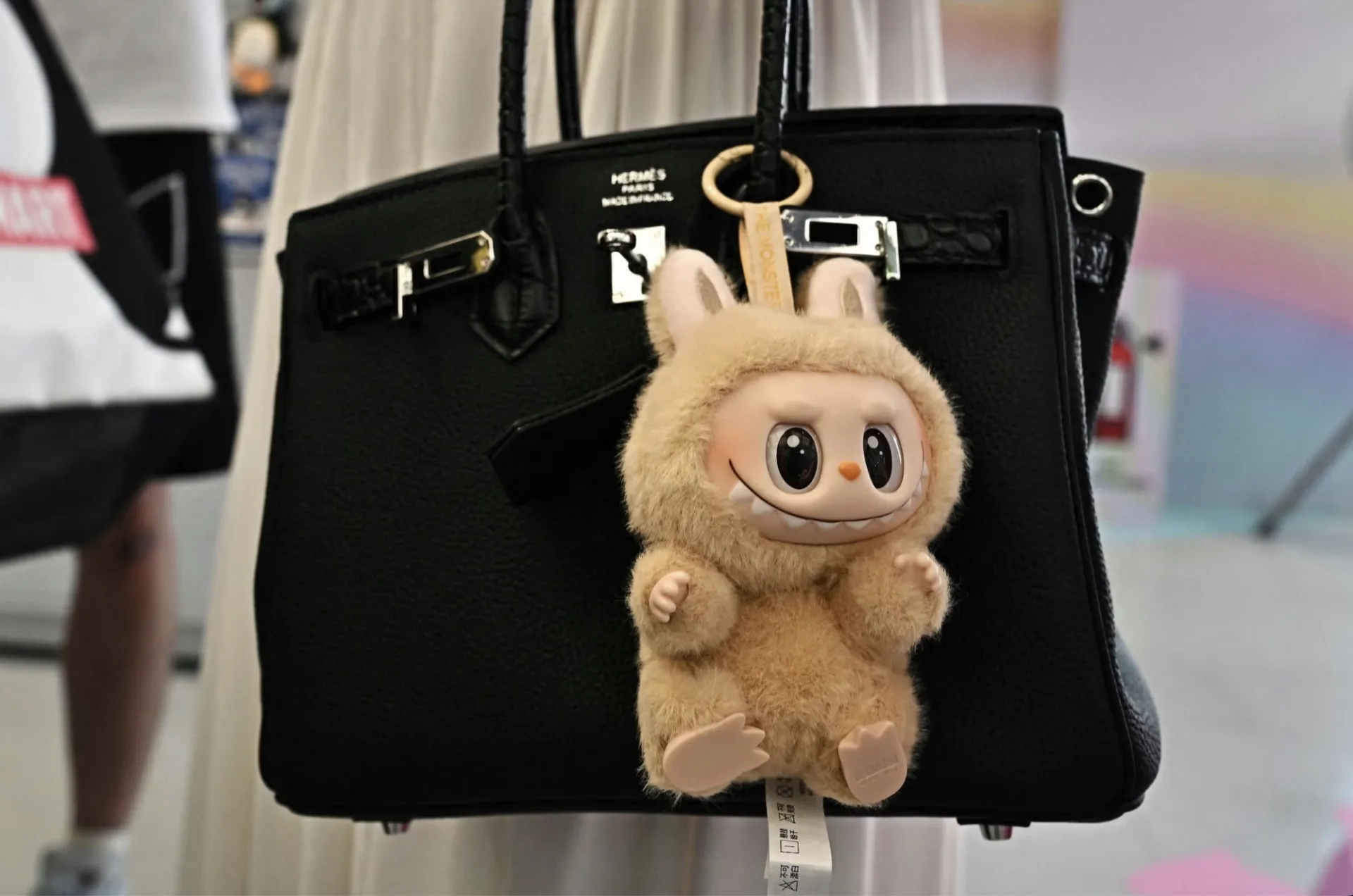
One of the more impactful methods nowadays that allow us to see how people view the economy is through social media. Specifically, social media trends have become a way to get a perspective into consumer psychology and sentiment, since popular trends can reflect how a large portion of the population thinks. Let’s look at one of the most recent consumer trends: Labubus. Early this year, Labubus exploded in popularity, thanks to social media. You could see them everywhere, attached to people’s bags, backpacks, or on keychains.
On the surface, this is simply just another social media trend going viral. But when looking at data across the United States, there is a very similar pattern occurring with Labubus and Lipstick. Early this year, McKinsey conducted a study on the state of luxury goods, where they assessed that “luxury value creation is expected to create less value than the previous year”, with the reasoning being because of “macroeconomic headwinds” and oversaturation within the market.
Looking at the patterns between now and 20 years ago, people are substituting more expensive, luxury goods for cheaper ones that serve the same purpose. As mentioned previously, these forms of recession indicators are not always reliable, but it definitely gives us an insight into how people are spending their money, and what it means for the economy as a whole.
Another trend has become popular recently: calling everything a “recession indicator”. Whether it be shifting fashion trends or using Klarna to pay for your DoorDash order, The Wall Street Journal outlines the fact that “talk of recession has a habit of turning into a self-fulfilling prophecy: households or businesses can pull back spending because of economic concerns, eventually spurring the very recession they feared.” With Millennials and older Gen-Z’ers experiencing the effects of a recession, people become paranoid when they see headlines of people struggling to pay their bills or massive cultural shifts. It causes people to see the worst case scenario, and these two groups of people voice their concerns on social media platforms, where the sentiment spreads around extremely quickly. If all they see online are talks about an incoming recession, people are more likely to believe it and start saving their money in case things get worse.
However, the real question is where did all of this concern come from in the first place? When, and more importantly why, did people begin to have a more pessimistic outlook on the economy? There is one key metric mentioned earlier that could provide an answer.
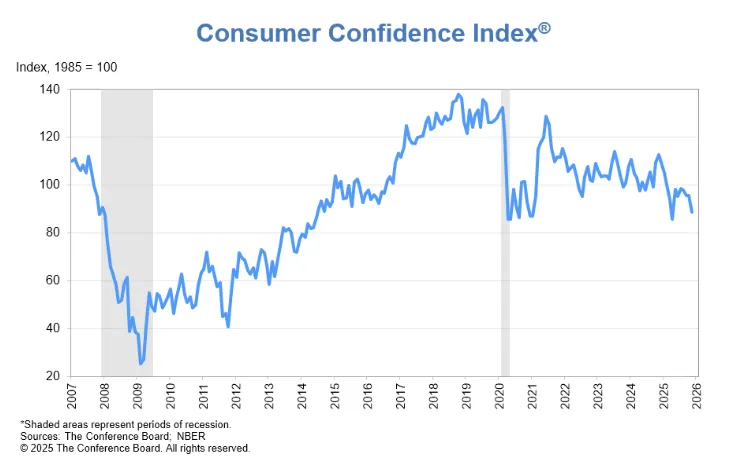
Over the last few years, consumer confidence has been extremely inconsistent, with it currently being at almost a 10-year low. When looking at the Consumer Confidence Index posted by The Conference Board, consumer confidence was steadily increasing up until the recession in 2020. Nowadays, it is extremely volatile. Not only does this reflect poor consumer confidence, it also reflects how turbulent and uncertain people feel about the current state of the economy. If confidence can swing so heavily in just a few months, people become fearful a lot quicker and easier than ever before, causing them to want to prepare in any way they can. This is what causes people to become more aware about every metric that comes out, and every headline that appears that might hint at a recession. It shows how uncertain people are about the economy, and why people are talking about unusual recession indicators more.
With all of this pessimism propagating throughout society shown through consumer sentiment graphs, people have become increasingly fearful of the future state of the economy. Social media has only fanned the flames, spreading this message through online trends and shared discussion on public forums. In the end, will all this talk of a recession actually lead to one? No one really knows yet, and we can only confirm after it has happened.