Too-Big-To-Fail Or Too-Big-To-Resist?
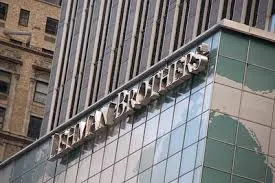
“AIG, Lehman Shock Hits World Markets” (1)
As this headline blazed across the front page of The Wall Street Journal on September 16, 2008, “shock” became an understatement. The 2008 Global Financial Crisis soon became the most severe recession since the Second World War. At its lowest, America’s GDP fell by 4.3% while unemployment doubled to 10%. (2) Consumer confidence in markets plummeted with the fall of financial titans like the two mentioned in the headline: American International Group (AIG) and Lehman Brothers. Both of these firms were considered “too big to fail.” The label was proven by the Global Financial Crisis, though in opposite ways. The bankruptcy of Lehman Brothers is widely considered the climax of the Great Recession, with its interconnectedness triggering a global banking crisis. Seeing AIG’s concurrent demise and hoping to avoid another financial catastrophe, the Federal Reserve rescued the firm via a bailout.
Since the crisis, “too big to fail” firms remain an ever-present threat to financial stability due to the far-reaching reverberations of their potential insolvency. Economists continue to debate possible solutions to avoid repeat crises like AIG and Lehman Brothers, ranging from regulation to partitions. This article hopes to explore how the mere existence of “too big to fail” firms can limit these proposed solutions, especially in how they encourage more “too big to fail firms” to grow, thus presenting greater volatility to financial markets.
To begin, it needs to be established that “too big to fail” is an inherently ambiguous term. William Dudley, former President of the Federal Reserve Bank of New York, provides an apt definition as “when the failure of a large, complex financial institution threatens to cause such significant disruption to the financial system and the economy that these potential costs are judged to be too severe to bear, leading to government intervention to prevent the failure.” (3) Conversely, the Financial Stability Board directly identifies several notable banks as “Global Systematically Important” like JP Morgan Chase, HSBC, and Citigroup. (4) These various definitions may differ in the wording, though they all emphasize three pillars:
- Size: As the term implies, these firms need to be massive. For example, Lehman Brothers was the fourth-largest investment bank in the US when it declared Chapter 11 bankruptcy in 2008. (5)
- Interconnectedness: These complex corporations need to be deeply intertwined with the existing financial system such that their absence will cause significant structural disruptions.
- Systematic Risk: The combination of a firm’s size and interconnectedness poses such a threat to economic stability that there is an expectation that governments will intervene to stop their collapse.
Unfortunately, the only definitive way to prove if a firm is “too big to fail” is to see what happens when it fails. However, moving forward, any company labeled “too big to fail” in this article will fall under all three aforementioned criteria.
Unique regulations already exist for the systemically important firms. For example, designated banks are required to hold additional capital as a safeguard against systemic risk. Other measures include the Dodd-Frank Act, passed in the wake of the Global Financial Crisis, which aims to improve federal oversight. (6) Economists are still debating both the feasibility of stricter regulation and the impact of directly breaking up these systematic institutions. Enacting these measures would theoretically ensure that all current “too big to fail” firms cease to exist. In their absence, the chance of new or existing corporations growing to be “too big to fail” would be severely diminished.
One hallmark of these systemically important firms is their metaphorical “safety net.” The potential for a cataclysmic financial crisis is reason enough for central banks to rescue these firms from failure, whether through a direct bailout or a pressured merger. Within the context of the 2008 Recession, the two most relevant examples of this dynamic are AIG and Merrill Lynch. AIG, America’s then–largest health insurer with over 76 million global customers, was directly bailed out by the Federal Reserve for $182 million. (7) Conversely, Merrill Lynch, heavily volatile following exposed investments in subprime mortgages, was bought out by the Bank of America under government pressure. (8) By bailing out “too big to fail” firms, the Federal Reserve indicated that similar companies wouldn’t face major accountability for their reckless behavior, despite their role in causing the crisis in the first place. Even though AIG was bailed out in 2008, that didn’t stop their executives from making continued rash moves less than a year later. (9)
Government revenue, which funds these buyouts, overwhelmingly originates from taxpayer money. As such, “too big to fail” firms bear no direct financial endangerment. With this combination of incentives, burgeoning firms will look towards becoming more and more entrenched within every sector of the global financial system. By becoming “too big to fail,” they can rely on central banks’ precedent of intervention to bail them out due to their threat to economic stability. The Federal Reserve of New York documents this empirical pattern, noting that banks see a “higher level of impaired loans after an increase in government support, as measured by Fitch Ratings’ support rating floors (SRF).” (10) The presence of this government backing, defined as funding discounts, rescues, and the market expectation of this support, incentivize firms to pursue high-risk, high-reward investments. Nobel Laureate and Columbia professor Joseph Stiglitz aptly summarizes this threat: “With the bail-out of AIG, we have officially announced that any institution which is systemically significant will be bailed out.” (11)
Such a mentality towards corporate risk is known as “moral hazard.” While this concept also lacks a conclusive definition, it has been discussed as early as the 1960s. Nobel-winning economist Kenneth Arrow judges this term in the context of insurance markets:
"Medical insurance increases the demand for medical services, since the individual pays less for them; this is an example of the general phenomenon of moral hazard, which refers to the case where the behavior of the insured party changes as a result of insurance." (12)
Later definitions expanded this description to financial markets, ironically portraying how governmental rescues act as a form of “insurance.” One such case of this concept can be seen as laying the framework for future interventions in the Global Financial Crisis. Founded in 1994, Long-Term Capital Management L.P. (LTCM) was a global hedge fund before its massive exposure left it vulnerable to economic shocks in Southeast Asia and Russia. Not willing to let the firm fail, the Federal Reserve facilitated a then-$3.6 billion buyout of LTCM by fourteen other firms. (13) Thus, LTCM was considered “too big to fail,” as the potential consequences of its failure were too threatening for the government to ignore.. Then-Chairman of the Federal Reserve Alan Greenspan, while giving Congressional testimony regarding LTCM’s failure, explicitly used the term “moral hazard” to describe the legacy of the buyout. (14) A study spearheaded by the University of Cambridge details how this precedent relates to the events in 2008.
“Although at subsequent inquiries the Federal Reserve was at pains to emphasise that there was no direct government bailout, there is little doubt that the Federal Reserve’s intervention had been crucial. Some critics such as Dowd (1999) have seized on this as a major factor that increased the degree of moral hazard (also created by the sharp drop in interest rates that followed the crisis (Haubrich, 2007 and BIS, 1999)), with subsequent adverse effects on the level of risk-taking by financial institutions in the succeeding decade.” (15)
This mentality fostered the excessive behavior that catalyzed the housing and subprime housing bubbles, directly leading to the 2008 recession. Furthermore, non-casual parallels exist as well. One such example is that of James Cayne, CEO of the investment bank Bear Stearns during the Great Recession. Notably, he was also one of the principal investors of LTCM during its collapse in 1998. (16) It’s possible his first-hand experience from LTCM aided him in negotiating favorable prices during Bear Stearns’ buyout in 2008, after a Federal Reserve emergency loan proved insufficient to prevent its failure. Long-Term Capital Management’s relation to the Global Financial Crisis proves how the precedent set by “too big to fail” firms can prove disastrous for economic stability, raising concerns for future economic stability.
Beyond past precedents, the current presence of systemically important firms can encourage the creation of additional firms through mergers and acquisitions. When two or more companies combine, the integration of their assets under management, customer base, and economic reach further complicates financial markets. Many of our existing “too big to fail” firms grew through this process, such as J.P. Morgan & Co. and Chase Manhattan merging to create JPMorgan Chase. Ironically, several large financial institutions grew even larger by bailing out struggling firms during the Great Recession. Merrill Lynch and Bear Stearns were bought out by mega-corporations Bank of America and JPMorgan Chase, respectively. As such, the mere existence of “too big to fail” firms can incentivize mergers and acquisitions, leading to more firms joining their ranks.
Curiously enough, a relevant example of this phenomenon can be found across the Pacific in China’s banking sector. The banking industry in China is dominated by the “Big Four,” the Industrial and Commercial Bank of China (ICBC), the China Construction Bank (CCB), the Agricultural Bank of China (ABC), and the Bank of China (BOC). By raw worth, these are the four largest banks in the world, managing a combined $22 trillion in assets. (17) Alongside the Bank of Communications (BoCom), they are all listed as “Globally Systemically Important” Banks, solidifying their position as “too big to fail.”
Beyond the growth of these banks, there has been a skyrocketing in mergers and acquisitions in China’s small banking sector. In 2024, there were around 300 mergers of rural banks into regional lenders, the highest in history. (18) This wave was driven by the stability that consolidation could provide, especially in the wake of the COVID-19 pandemic. This was due to their relatively weak funding bases and a surge in loan defaults compared to large, state-owned banks. (19)
In comparison, the “Big Four” banks weathered the pandemic with the help of 3 trillion loans from the People’s Bank of China (China’s central bank). (20) Small and medium-sized banks could see how the systemically important banks were able to remain stable, thus emboldening them to achieve a similar status through ambitious M&A activity. Even if these record-breaking mergers are considered troubled and unstable, these new conglomerates can survive by following the playbook of the existing “Big Four.” Through aggressive mergers and acquisitions, even these minor firms can grow ever more interconnected in the existing financial system to become “too big to fail.”
The current debate on combating the risk of “too big to fail” corporations centers around whether to regulate their growth or to break them up deliberately. However, these two proposed solutions are intertwined. By removing these systematically important firms, we can remove a substantial motivation for similar firms in the future, a de facto regulation. In doing so, central banks such as the Federal Reserve or the People’s Bank of China can reverse the dangerous precedent set by bailouts and buyouts. Additionally, the unsteady growth through risky mergers and acquisitions will be less of a threat by diminishing any “moral hazards.” By targeting their incentives, regulators and policymakers can reduce the possibility of repeating the lessons of 2008, especially given how much more interconnected the economic world has become since then. When the inherent purpose of independent central banks is to maintain financial stability, “too big to fail” firms hold too much leverage and are too large a threat to be left alone. As Ben Bernanke, Chairman of the Federal Reserve during the Global Financial Crisis, put it: “It is unconscionable that the fate of the world economy should be so closely tied to the fortunes of a relatively small number of giant financial firms.” (21)
Works Cited
1. Craig, Susanne, et al. “AIG, Lehman Shock Hits Markets.” The Wall Street Journal, 16 September 2008.
2. Weinberg, John. “The Great Recession and Its Aftermath.” Federal Reserve History, 22 November 2013, www.federalreservehistory.org/essays/great-recession-and-its-aftermath.
3. Dudley, William. “Ending Too Big to Fail.” Global Economic Policy Forum, 7 November 2013, New York City.
4. Financial Stability Board. “2024 List of Global Systematically Important Banks (G-SIB).” Financial Stability Board, 26 November 2024, https://www.fsb.org/2024/11/2024-list-of-global-systemically-important-banks-g-sibs/.
5. Wiggins, Rosalind, et al. “The Lehman Brothers Bankruptcy A: Overview,” Yale Program on Financial Stability, 3a, v1, 1 October 2014.
6. United States, Congress. Dodd-Frank Wall Street Reform and Consumer Protection Act. Public Law 111-203, 21 July 2010.
7. Federal Reserve Bank of New York. "Actions Related to AIG." Federal Reserve Bank of New York, https://www.newyorkfed.org/aboutthefed/aig
8. Story, Louise, et al. “Bank Chief Tells of U.S. Pressure to Buy Merrill Lynch.” The New York Times, 11 June 2009.
9. Mason, Jeff, et al. “Outraged Obama goes after AIG bonus payments.” Reuters, 17 March 2009.
10. Afonso, Gara, et al. "Do 'Too-Big-to-Fail' Banks Take On More Risk?" Federal Reserve Bank of New York Economic Policy Review, vol. 20, no. 2, Dec. 2014, pp. 41-58, Federal Reserve Bank of New York.
11. Stiglitz, Joseph. “Too Big to Fail or Too Big to Save? Examining the Systemic Threats of Large Financial Institutions.” Joint Economic Committee Hearing, 21 Apr. 2009.
12. Arrow, Kenneth. “Uncertainty and Welfare Economics of Medical Care.” American Economic Review, vol. 53, no. 5, pp. 941-973, December 1963.
13. Fleming, Michael, et al. "Near Failure of Long-Term Capital Management." Federal Reserve History, Federal Reserve Bank of New York, https://www.federalreservehistory.org/essays/ltcm-near-failure.
14. Greenspan, Alan. “Statement Before the Committee on Banking and Financial Services.” Board of Governors of the Federal Reserve System, Federal Reserve Bank of St. Louis, 1 Oct. 1998.
15. Allington, Nigel F.B., et al. "Lessons Not Learnt: From the Collapse of Long-Term Capital Management to the Subprime Crisis." Cambridge Centre for Economic and Public Policy Working Paper Series, no. 03-12, Mar. 2012, Department of Land Economy, University of Cambridge.
16. Lowenstein, Roger. “Long-Term Capital Management: It’s a short-term memory.” The New York Times, 7 September 2008.
17. S&P Global Market Intelligence. "The World's Largest Banks by Assets 2024." S&P Global, 2024, https://www.spglobal.com/market-intelligence/en/news-insights/research/the-worlds-largest-banks-by-assets-2024.
18. Reuters. "China's Record Mergers in $8 Trillion Small Banking Sector Raise Future Risks." Reuters, 12 Feb. 2025, https://www.reuters.com/business/finance/chinas-record-mergers-8-trillion-small-banking-sector-raises-future-risks-2025-02-12/.
19. Fitch Ratings. "China Accelerates NPL Resolution to Curb Risks at Smaller Banks." Fitch Ratings, 21 Aug. 2022, https://www.fitchratings.com/research/non-bank-financial-institutions/china-accelerates-npl-resolution-to-curb-risks-at-smaller-banks-21-08-2022.
20. Liu, Yun, et al. “SMEs’ line of credit under the COVID-19: evidence from China.” Small Business Economics, vol. 58, pp. 807-828, 26 March 2021.
21. Cooke, Kristina. “Beranke: Too big to fail a “pernicious” problem.” Reuters, 20 March 2010, https://www.reuters.com/article/us-usa-fed-bernanke-idUSTRE62J0SM20100320/.