Tax or Rebate? Designing Effective Carbon Policy for the Energy Sector
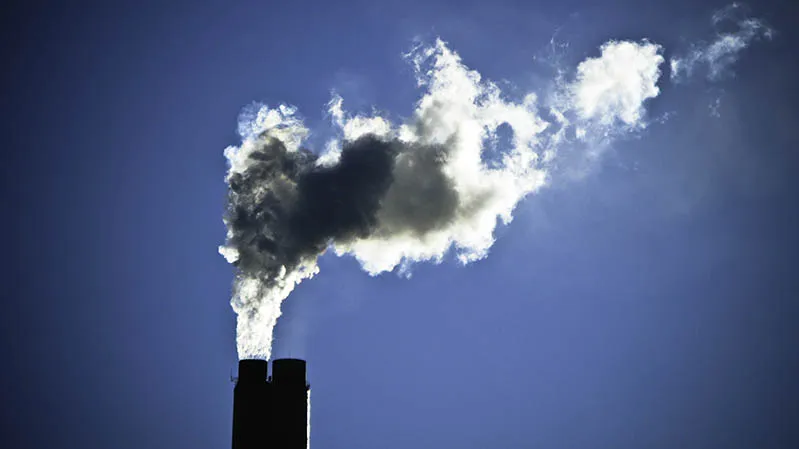
We rely on the environment far more than the apparent effort with which we take care of it. Global warming continues to put pressure on the Earth's finite natural resources and has dire consequences for certain, particularly vulnerable groups. In the United States, the energy industry is one of the largest industrial carbon dioxide-emitting sectors. According to the U.S. Energy Information Administration, in the United States, sixty percent of electricity generated comes from fossil fuels, which emitted a combined 1,532 million tons of carbon dioxide into the atmosphere in 2023. These carbon emissions are widely known to cause increasing global temperatures which have widespread negative implications and play a role in worsening severe weather events, food insecurity, displacement due to rising sea levels, and more. Moreover, NASA describes these effects as “irreversible for people alive today.” Given that the energy industry is the second-largest emitting sector behind transportation, how can we incentivize energy corporations to convert to clean forms of energy and, most importantly, emit less carbon?
This paper examines two economic policy levers aimed at curbing energy companies’ carbon dioxide emissions. The first is a tax on carbon-emitting U.S. energy firms that effectively “prices out” emitting CO2 as a reasonable byproduct of business activity. The second is a thought experiment into a rebate system awarded to U.S. energy firms whose CO2 emissions are decreasing. Exploring these options will provide insight into policy levers that can achieve the ultimate goal of reducing carbon emissions.
Case Studies Supporting This Approach
Political leaders can use economic levers to influence human and corporate behavior. While taxes are often implemented to generate revenue for the taxing body, taxes and rebates also play an important role in influencing agent behavior within an economy. There are cases in which this is carried out more liberally. For example, the Singaporean government employs vehicle-related flat and variable taxes to generate revenue while limiting the number of cars on the small country’s roads. The Additional Registration Fee (ARF) associated with registering a vehicle imported into the country ranges from 100% of a car’s Open Market Value (OMV) to 320% of its OMV.
In addition, the country also employs a Certificate of Entitlement (COE) system in which consumers must bid for the right to merely possess a vehicle; even for the least powerful type of consumer vehicle, these COE licenses often go for roughly $128,000 SGD, nearly double the cost of Singapore’s median salary of $66,000 SGD a year. Relevant to this paper is a Singaporean rebate-surcharge policy based on a vehicle’s reported emissions at the time of purchase. When you purchase a car in Singapore, its particle emissions across various pollutants such as carbon dioxide and others determine whether you will receive a rebate of $25,000 SGD, a surcharge of $25,000 SGD, or somewhere in between.
British Columbia’s carbon tax scheme is another example of policymakers being able to use economic levers to price out carbon emissions and change people’s behavior. According to a review of the scheme written by Komanoff and Gordon, affiliates of the Carbon Tax Center, the Canadian province of British Columbia implemented a tax on the purchase of fossil fuels in 2008, starting at $10 per ton emitted and increasing by $5 per ton each year to a steady $30 per ton emitted in 2012 and thereafter. Results from 2008 to 2013, when compared to the pre-tax period of 2000 to 2007, revealed a statistically significant decrease in emissions: British Columbia’s emissions decreased by 6.1% during the post-tax period, while the rest of Canada actually increased by 3.5% during the same period.
These are examples of economic policy levers that force consumer decisions: when an immediate tax is charged for potential or future carbon emissions, consumers change their behavior and are likely to opt for more sustainable practices instead. In the Singaporean case, those who cannot afford to pay the emissions surcharge on top of the other license costs may opt for an electric vehicle instead. In the Canadian case, those who cannot afford to pay an additional tax on fossil fuels may choose to use public transport instead to get around. How might we apply these principles of consumer behavior to reduce the U.S. energy industry’s carbon emissions?
Exploring a carbon tax on emissions
A harsh tax on carbon emissions that increases as CO2 emissions increase may force energy companies to accelerate their transition to clean energy sources and, at the very least, reduce their carbon emissions. A flat-rate tax would aim to internalize externalities across multiple dimensions and tie the cost of emissions directly to emitting companies. By pricing yearly CO2 emissions into a company’s current tax bill, this surcharge would hold polluters financially responsible for their actions. The tax must be set at a “prohibitive” rate, meaning that it must be high enough to change energy companies’ behavior and encourage them to switch to green energy-producing mechanisms.
An analysis conducted by Martinsson, Sajtos, Stromberg et al. among Swedish manufacturing companies over the 26 years following Sweden’s implementation of a carbon tax revealed “an emission-to-pricing elasticity of around two, with substantial heterogeneity across subsectors and firms,” suggesting that firms are incredibly responsive to carbon pricing, and that this effect is widespread across a diverse array of companies (heterogeneity). The country’s carbon tax started at roughly 0.25 Swedish Krona per kilogram of CO2 emitted for “standard emissions” and progressively increased to 1.05 Krona per kilogram in 2015. This system also included an “exempt” category for certain companies. As the country periodically changed the carbon tax rates for these two categories, they generally found that when the tax rate increased, carbon emissions would decrease, and vice versa.
However, some concerns immediately arise about the feasibility of implementing such a tax scheme in the United States. Will companies not just shift their emissions behavior elsewhere globally? In this case, to prevent “carbon tax evasion,” hefty fines can be imposed on energy companies for actively offshoring carbon-related activities. Furthermore, an import tax can be established on items that have generated carbon emissions elsewhere in the world at the order of American energy companies. These U.S. firms would have to pay the tax as if they themselves produced the carbon in the United States. While it primarily serves as a tool to make carbon emissions unaffordable for energy companies, it would generate revenue for the United States government, which can be appropriated to environmental or other beneficial causes. However, this revenue would come at the cost of economic inefficiencies as illustrated by the concept of deadweight loss.
Policymakers will also have to face the sizable challenge of balancing environmental goals with the economic consequences of discouraging unclean energy production, which makes up a majority of domestic energy production. If being in the energy industry becomes less profitable, fewer enterprises may decide to enter the market, potentially increasing reliance on foreign powers for energy. Furthermore, the question of converting current fossil fuel-related jobs into green energy jobs will require a human capital investment on the part of energy companies.
Exploring a carbon rebate for emissions reductions
In the case of government-managed sustainability efforts, a rebate would mean that cash is returned to a company after fulfilling certain criteria. This is a less punitive method than the carbon tax. A flat rebate per kilogram decrease in CO2 emitted year-over-year has the potential to decrease companies’ carbon emissions. For completeness, the following stipulation must be applied to the rebate: the cash received must only be used for environmentally friendly ends, such as further emissions reductions, investment in sustainable capital, and so on. Otherwise, if companies were free to use it as they pleased, they might use it in environmentally harmful ways, conflicting with the rebate’s ultimate purpose.
Companies must document and submit evidence of proper rebate usage to an authoritative body, for example, the Environmental Protection Agency (EPA). Unlike the tax, however, it would not generate revenue for the government and would avoid potential governmental inefficiency by allowing the rebate to be directly injected into the United States’ GDP while being put toward environmentally-conscious companies and projects. Energy companies are thus incentivized to use the rebate to decrease their own CO2 emissions in the most efficient way possible, as a decrease in their own emissions levels would result in an even larger rebate in the future, which they can use to upgrade their operations with sustainability in mind. If the company does not use the rebate by the end of the fiscal year, the company will pay a fine and forfeit the rebate, which will be returned to the federal government for appropriate use; this could be implemented to deter corporate inaction.
Conclusion
While a carbon tax, carbon rebate, or a combination of the two may potentially be an effective policy lever to reduce carbon emissions in the U.S. energy sector, many questions remain about the feasibility of its implementation. Because the majority of U.S. energy is produced using fossil fuels, there will likely be a time delay before renewable energy projects are set up to meet demand. Should the production of fossil fuels decline in response to these policies, it is not certain whether renewable sources will be able to meet this demand. Furthermore, given the current artificial intelligence boom and its energy requirements, forcing companies’ hands through a carbon tax or rebate mechanism may unintentionally stifle innovation and have other economic consequences, such as increasing household energy prices and reducing certain kinds of jobs. The undeniable presence of paid lobbyists who influence politicians in Congress is also a factor; the oil and gas industry spent over $104 million on lobbying in 2025, compared to roughly $62 million spent on behalf of the renewable energy sector.
One way to make progress on these fronts is to legislate the carbon tax or rebate such that it starts relatively small, as in the Swedish case, but increases with time and becomes prohibitive within ten to twenty years to allow companies and markets time to adjust. Experimentation and public feedback will be important in understanding how to maximize the policy’s efficacy. Enforcement of any policy, however, may vary depending on the administration in charge. Overall, the carbon tax and carbon rebate should be viewed as serious levers to deter the U.S. energy sector from emitting more carbon: when push comes to shove, Congress must use the economic tools at its disposal to make carbon emissions unprofitable.