Street Level Entrepreneurship: New York City’s Immigrant Food Trucks
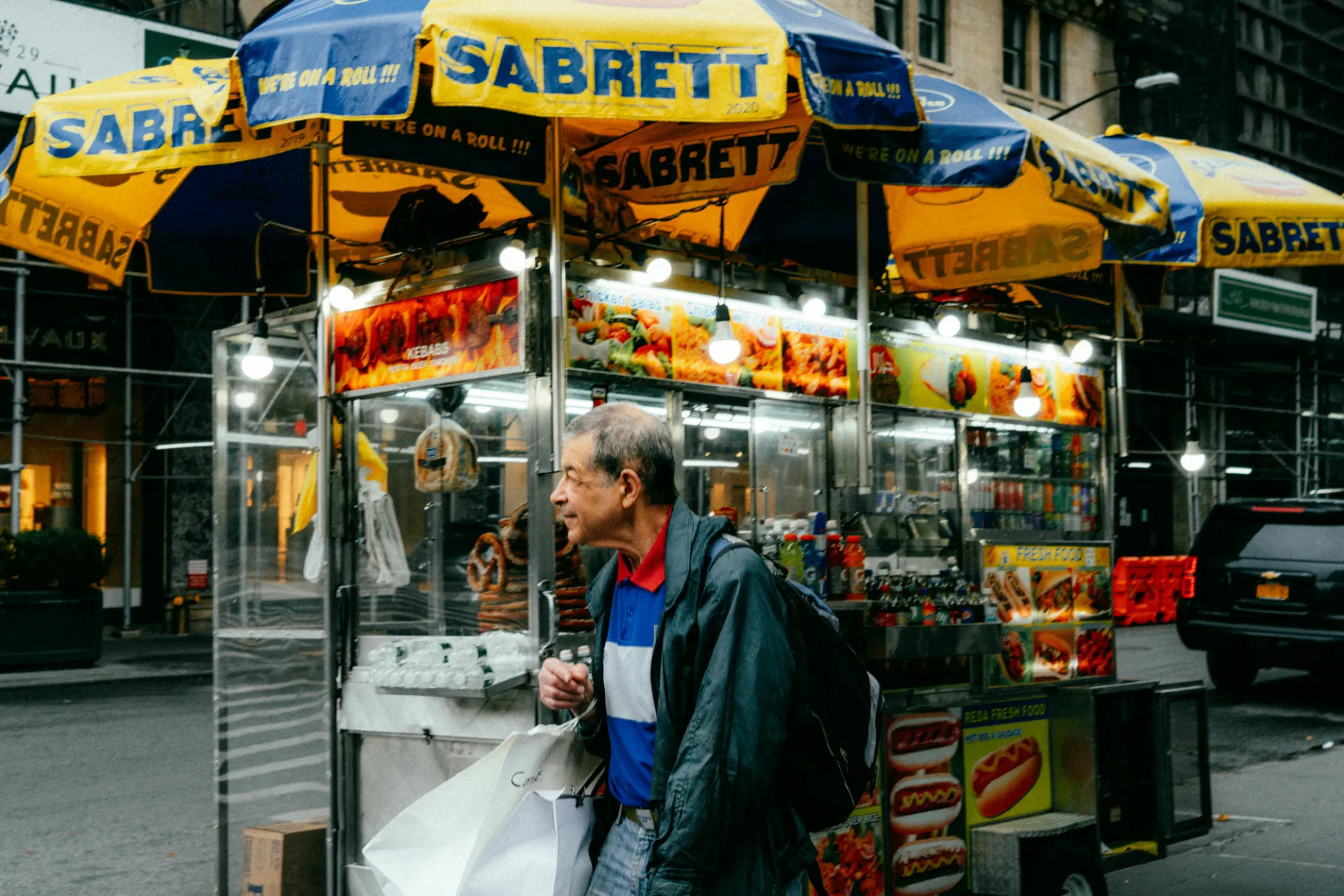
Not only are they Columbia Dining’s biggest competitors, but the nearly 23,000 food carts and trucks around NYC, as of 2024, are the heartbeat of a culinary caregiver that has nurtured late-night studiers and busy workers throughout the city. However, although the crackle of their grills and aromatics of their spices are incredibly familiar, consumers may be less aware of the socioeconomic situations of the largely immigrant vendors behind these mobile food vending units, or MFVUs. According to the Immigrant Research Initiative, around 96% of NYC street food vendors are immigrants, making the vitality of immigrant populations and street vending inextricably linked. However, under current regulations, New York City has sharply curtailed the fiscal and social benefits that mobile food vending can provide for both vendors and consumers. Understanding the city’s immigrant populations, how they have naturally been attracted to the food vending industry, and the inefficiencies that government policies have created creates a holistic view of the city’s immigrant entrepreneurs.
A City of Immigrants
To understand the mobile food vending industry in New York, we must acknowledge the city's immigrant population, both documented and undocumented. According to NYC's 2024 annual report on immigrant population, the city is home to more than 3 million immigrants, making up 38% of its total population. While some may believe that these immigrants, especially undocumented, are a burden on city services, in reality, they are significant contributors to New York’s economic output. The immigrant population is highly concentrated in the working ages. While only accounting for 36% of the overall population, they represent 42% of working-age New Yorkers and the resulting 44% of the labor force. This means immigrants are highly represented in the city workforce and are even more likely than natural-born citizens to be involved in the city economy.
Furthermore, the common narrative that undocumented immigrants especially drain social programs without contributing their share is completely untrue. In 2023, undocumented immigrant households alone paid over $89.8 billion in total taxes, propping up social programs from waste management to Social Security. As Reuters further explains, although undocumented immigrants do not possess a Social Security Number for taxpayer purposes, they receive a taxpayer identification number (TPIN). This identification is distributed regardless of immigration status, allowing for the IRS to collect tax on all incomes of the American workforce. No matter what, the IRS will always receive its share. Clearly, even the working undocumented immigrant population pays taxes at both the state and federal levels, cementing their place in the US economy.
Looking closer, TPINs are also a required component of any food vending license application, which implies that every immigrant food vendor is also paying their share to the American tax system while not receiving the full benefits of social programs like Social Security. Thus, from a fiscal perspective, it is in the best interest of city governments, especially New York’s, to provide accessible employment opportunities for the immigrant workforce, as the undocumented portion contributes to tax revenues while imposing minimal costs to social programs paid out to citizens.
Because conventional jobs from an immigrant perspective pose barriers such as language, limited documentation, and educational constraints, the city must focus instead on less formal methods of employment. While other articles may explore the large participation of immigrants in industries like construction and maintenance, street vending, due to its low start-up costs and flexibility, has also long been a pathway to self-employment and provides both cultural expression and economic vibrancy to the city.
Vehicles of Economic Mobility
When compared to brick & mortar restaurants, food carts and trucks are an attractive avenue of entrepreneurship. According to Toast, a leading restaurant-technology company, accounting for equipment, permits, and inventory, it takes between $5,000-$10,000 to start a food cart and $75,000-$250,000 to start a truck. While restaurants necessitate at least a million in start-up costs, food carts and trucks allow immigrants who may not have access to such large streams of financing at any given time to enter into the food vending market with relative ease. Once established, vendors tend to experience weekly profits ranging between $250 and $1000 equating to yearly incomes of around $12,500 on the low end and around $50,000 on the higher end. Due to the high dependence on foot traffic, weather and the seasons can greatly influence street vending incomes with merchants experiencing lower incomes during the winter months.
Still as the Immigrant Research Initiative explains, food vendors have generally more stable incomes when compared to other type street vending. In comparison, the median weekly income for full-time wage and salary workers was $1,001 or, using our estimation process, $50,050 per year. However, this estimate is inflated by the higher wages of immigrants in occupations requiring bachelor's degrees and higher. Taking into account the effects of these higher wages, the income of a food vendor, who requires no degree, becomes quite competitive. In essence, due to the low startup costs and educational barriers, street vending is a sustainable occupation for many foreign-born New Yorkers.
Even when compared to other industries with largely immigrant workforces, street vending stands out as an attractive option. In the NYC construction industry, immigrants make up over 60% of the workforce and only earn a median salary of $31,000. Examining the range of street food vending incomes, street vending clearly offers greater financial gain and also avoids the potential injury and health risks that such occupations inherently possess. Meanwhile mobile food vending offers cultural expression and less manual labor, explaining why historically immigrants have followed the street vending pathway into entrepreneurship.
Regulatory Roadblocks
However, no matter how attractive the street food industry appears, the regulatory landscape surrounding mobile food vending has severely limited many positive benefits it generates for the city and for the immigrant population. The main policy that bottlenecks entrepreneurship is that the city requires all MFVUs to carry vending permits. For civilians, city-wide permits are capped at 2,800 for the standard mobile unit and currently there is an over 10,000 name waitlist for these permits. Due to the extreme scarcity of permits, many food trucks have no choice but to turn towards informal markets where previous food truck operators supply second-hand permits to rent. In these second-hand markets, a permit that costs $200 for the original owner to apply for can be rented out every two years for $15,000-$20,000.
When also taking into account the 23,000 active vendors across the city, obviously these regulations do not actually curtail illegal operations. While on paper these regulations seem to prevent problems like overcrowding from too many MVFUs or quality control, they instead introduce frictions for business owners and add an extreme cost to the 75% of food truck operations that don’t own their own permits. For vendors, the options are often to pay the hefty rent or completely operate without a permit, putting them at risk of inspections that could cease their business. If only the city government removed these caps on permit numbers, this artificial scarcity would lessen, allowing for proper regulation and lessening the food trucks relying on $20,000 thrifted permits.
The Destination
And the industry may not only be viable, but potentially life-changing as well. The Halal Guys, a New York City staple known for their affordable eats and authentic halal meals, originally started as a hot dog cart on 53rd Street and 6th Ave. In 1990, once noticing that Muslim taxi drivers had few options and limited time, they pivoted to selling halal plates that gradually became a part of the city identity. After navigating the permitting, licensing, and policies, now The Halal Guys have franchised and expanded to over 400+ brick and mortar restaurants worldwide while maintaining a fleet of their signature yellow carts to serve the New York foot traffic.
Even in this year’s mayoral race, Mayor-Elect Zohran Mamdani during his campaign addressed the current regulatory environment surrounding small businesses in New York. In his campaign platform, Mamdani proposed the Mom & Pops Czar, a government position that reports directly to the mayor, who will solely focus on improving the governmental landscape for businesses of NYC. Through policies to lower registration fees, speed up permitting processing times, and reduce regulations that do not impact fundamental standards such as health and safety.
These policies would allow more entrepreneurs to create their own businesses, increasing ideas and powering innovation. Furthermore, a report conducted by the NYC Independent Budget Office found that just increasing permit caps to include 10% of the waitlist would generate a net benefit of 3.3 million dollars for the city as a whole. Due to the streams of sales tax, income tax, and fees that these newly added MVFUs would create, the city would make more than the administrative costs in expanding and regulating these street vendors. Such a policy would increase the amounts of lawfully permitted MVFUs, reducing the fines and headaches they experience and also create more regulation in the formal market.
Mobile food vending is integral to a New York City life. While it may just be a plate, bowl, or small aluminum tin, street food is the product of thousands of dollars in startup costs, hours of work navigating permits and regulations, and the contributions of a largely underserved immigrant population. By reshaping the regulatory landscape, the city can not only provide its immigrant inhabitants with another stream towards economic growth, but improve itself along the way, one chicken over rice at a time.