The Novo Nordisk Economy: Denmark’s Growing Dependence on a Single Pharma Giant
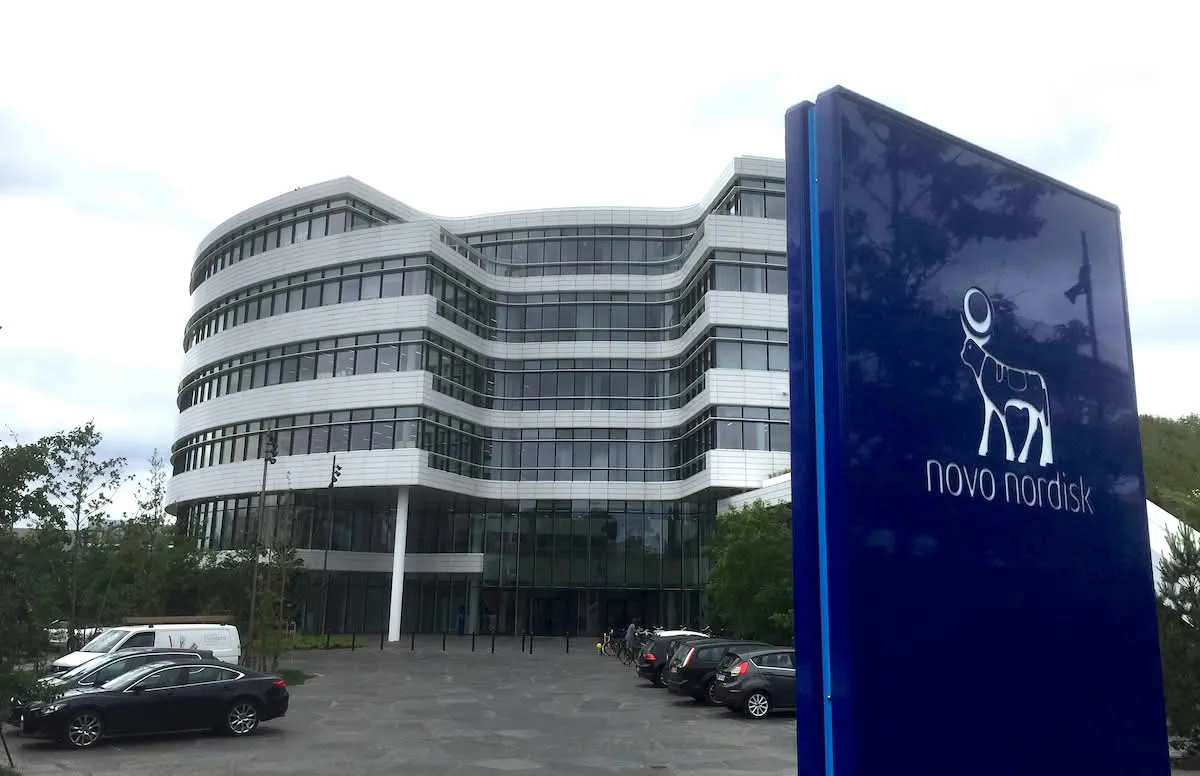
Denmark has experienced unusually strong economic performance in recent years, supported by rising exports, a stable fiscal position, and a rapidly appreciating equity market. Much of this strength can be traced to a single firm: Novo Nordisk. Novo Nordisk’s diabetes and obesity drugs, Ozempic and Wegovy, have reshaped global treatment patterns, and have simultaneously become a dominant driver of Denmark’s macroeconomic indicators. Novo Nordisk’s export volumes and profit growth are now key indicators of Denmark’s GDP outlook. At the same time, competition from Eli Lilly, the American pharmaceutical company whose own market share is expanding rapidly, has created a global innovation race that now influences Denmark’s economic outlook. This raises a central macroeconomic question: what happens when a high-income country becomes so tightly linked to the fortunes of a single big company?
Export Growth and Macroeconomic Contribution
One of the primary channels through which Novo Nordisk affects Denmark’s economy is its exports. GLP-1 shipments have become a major contributor to Denmark’s recent export growth, reflecting surging international demand for obesity and diabetes therapies. Forecasters now treat Novo Nordisk’s quarterly performance as a leading indicator of Denmark’s GDP, an unusual situation in which firm-level results closely predict national accounts.
The firm’s influence extends to financial markets. Novo Nordisk constitutes a dominant share of the Copenhagen stock index because its market capitalization is huge relative to Denmark’s overall market size. Denmark’s equity market is simply too small to balance a company that has become one of Europe’s most valuable. This limits policymakers’ ability to respond to the risk of having so much national wealth tied to one stock. Any attempt to ‘diversify’ or reduce this concentration, such as changing index rules or encouraging pension funds to hold fewer Novo shares, would create trade-offs. Reducing Novo’s weight in the index would lower market liquidity, and pushing investors into smaller companies could distort how capital is allocated, because those firms may not be able to absorb large inflows. Trying to spread out the risk would introduce new market problems, so policymakers have very little room to act.
The St Andrews Economist notes that Novo Nordisk’s outsized weight in the national index causes the Danish stock market to move closely with Novo’s share price. This means that wealth indicators, such as pension-fund performance, household investment portfolios, and broad stock-market measures, become unusually sensitive to developments affecting a single company. Denmark does have a range of strong industries, including shipping, renewable energy, and manufacturing, but Novo Nordisk’s rapid rise overwhelms this diversification at the macro level. Denmark has many different industries, but the headline economic numbers increasingly reflect Novo Nordisk’s performance alone. In other words, the economy is diversified in its makeup but concentrated in the outcomes that show up in national statistics.
Fiscal results mirror this trend. Novo Nordisk’s profits have contributed substantially to Denmark’s budget surplus, which is the largest in the European Union. Although this bolsters short-term fiscal buffers, it reinforces the extent to which Denmark’s public finances depend on a narrow segment of the pharmaceutical industry.
Economic Exposure in a Small Open Economy
Small open economies are naturally sensitive to external shocks, but Denmark’s exposure has increased as Novo Nordisk’s contribution to exports and market capitalization has grown. The country’s situation resembles Finland’s experience during the height of Nokia’s global dominance. Quoted widely as a cautionary example, Finland saw its equity markets, exports, and employment become closely tied to one firm during the Nokia era. During the height of Nokia’s global dominance in the late 1990s and early 2000s, Nokia accounted for a large share of Finland’s exports, stock-market value, and employment. When Nokia’s market share declined, Finland faced a sharp fall in exports and significant economic adjustment.
Denmark risks a similar dynamic. Heavy stock-market dependence on Novo Nordisk amplifies volatility and complicates macroeconomic management. Equity-driven wealth effects, pension-fund performance, and consumer confidence become increasingly correlated with a single company’s quarterly earnings. Exchange-rate pressures deepen the challenge. Allianz Research reports that expectations of future GLP-1 export volumes have contributed to appreciation pressures on the Danish krone. While a stronger currency lowers import costs for households, it reduces the competitiveness of other exports. This spillover raises the real exchange rate and places non-pharmaceutical industries at a relative disadvantage. In this sense, Denmark faces a mild version of a phenomenon often seen in natural-resource economies, where a booming export sector strengthens the currency and shifts resources away from other tradable industries.
Innovation Cycles and New Vulnerabilities
An even more significant challenge arises from global competition in the pharmaceutical industry. Eli Lilly, which has rapidly expanded its GLP-1 portfolio, has become a major competitor to Novo Nordisk. S&P Global notes that Eli Lilly may overtake Novo Nordisk in the weight-loss drug market due to a faster-moving research pipeline and aggressive investment strategies. Analysts suggest this shift could occur within the next two to four years, depending on regulatory approvals and production capacity. This competition matters not only for corporate market share but also for Denmark’s macroeconomic exposure.
The GLP-1 drug class is evolving rapidly. Advances in oral semaglutide (pill-based rather than injection-based) and next-generation incretin therapies (with reduced side effects) can alter market leadership within a single product cycle. As a result, Denmark’s economic performance is increasingly exposed to R&D timing, regulatory milestones, and production scalability challenges that lie outside the country’s control. This is a form of innovation-induced macroeconomic volatility, in which national growth becomes sensitive to technology cycles typically associated with high-risk biotech firms rather than sovereign economies.
If Eli Lilly pulls ahead or if global demand shifts toward a new therapeutic formulation, Denmark could experience slower export growth, weaker equity-market performance, and a reduction in the fiscal benefits it currently enjoys. The country’s business cycle could therefore partially synchronize with the product cycle of a single firm, an uncommon and potentially fragile economic structure.
Conclusion
Novo Nordisk’s success has generated significant benefits for Denmark, including strong export performance, robust fiscal revenues, and widespread increases in household wealth. However, the company’s scale has created a concentration risk that is unusual for a developed, diversified economy. Denmark’s structural diversification remains intact, but its aggregate outcomes increasingly reflect the performance of a single firm in a single therapeutic category. As competition intensifies, especially from Eli Lilly, Denmark faces the possibility that its business cycle will become increasingly aligned with the innovation cycles of the global pharmaceutical sector.
This dependence presents both opportunities and vulnerabilities. Understanding these dynamics will be crucial for policymakers seeking to maintain economic stability in an economy where one company has grown large enough to influence national performance.