A Natural Issue: The Amazon, Sustainability, and the Global Economy
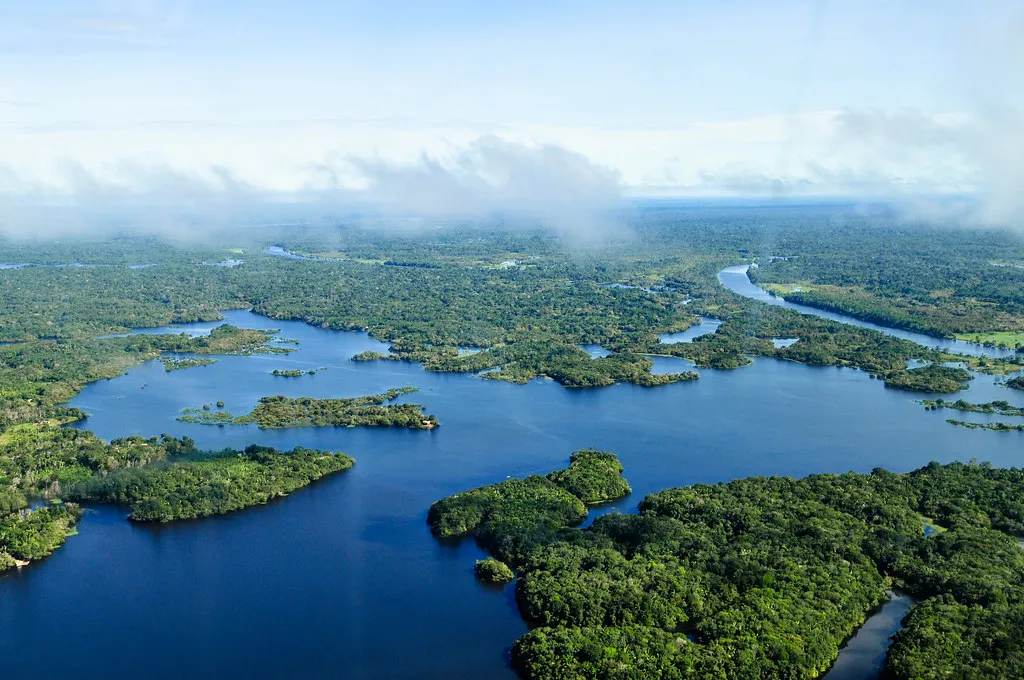
Producing roughly 20% of our planet's oxygen, the Amazon Rainforest is fittingly referred to as the "lungs of the Earth." 60% of this lush landscape is located in Brazil, a country whose tropical climate and fertile land have long shaped its agricultural and economic identity. The Amazon is key to Brazil maintaining one of the strongest comparative advantages in the modern global economy. The country possesses abundant arable land, a tropical climate, and a plethora of natural resources, factors which allow Brazil to produce soybeans, sugar, beef, and many other agricultural products more efficiently than most countries.
Classical trade theory would suggest that Brazil should specialize further in these goods, and they have done so for over a century. During the Milk Coffee Period, Brazil’s political and economic elite were almost exclusively coffee and milk producers, who subsequently structured national policy around the export of their goods. This period created a model in which agricultural commodities defined the country’s growth and governance, and today’s dominance in soy and beef is merely a continuation of that history.
However, unlike the smaller coffee plantations of the early twentieth century, modern agricultural expansion operates at a much larger scale, and requires vast tracts of land. Existing land is often less fertile and requires rehabilitation, so Brazil’s land expansion is primarily achieved through clearing sections of its portion of the Amazon Rainforest, which stretches roughly 5 million square kilometers. The deforestation of the Amazon, therefore, is not a localized failure; it is the case study on the consequences of a global economic structure that encourages agricultural specialization despite environmental costs.
Part I: Trade Structure
Brazil’s existing agricultural dominance is established and reinforced by its integration into global trade blocs. In Mercosur, Brazil joined a South American trade bloc that reduces tariffs and promotes economic integration among its various members. Through this agreement, Brazil became entrenched as an anchor for regional trade, expanding market access for its agricultural commodities. In BRICS, Brazil formed an economic coalition with Russia, India, China, and South Africa that formally increases trade cooperation and global influence outside Western-led institutions. More directly, it deepens Brazil’s trade ties with its largest commodity buyer, China. These institutions do not directly promote deforestation, but they lock in Brazil’s role as a large-scale commodity exporter. At their core, they are trade accelerators.
The data backs this up and highlights Brazil’s connection with China. Since 2023, over 50% of Brazil’s exported beef and 30.7% of all Brazilian exports are directed to China. Soybeans alone represent up to 16% of Brazil’s exports, and roughly $34.5 billion of those soybean exports are directed to China, a whopping 79% share. When such a large portion of national revenue is tied to a small number of commodities and buyers, producing a high volume of those commodities becomes the optimal strategy. China’s rapid urbanization and land constraints increase demand for food imports, while Brazil’s abundant arable land allows it to meet that demand more efficiently than other exporters.
Academic research confirms this through how deforestation translates to land use. Based on a 2010 study, cattle ranching was found to be the primary use of freshly deforested land in the Amazon. However, soy production has taken an increasingly significant role, as it has historically prompted forest clearing while also displacing cattle ranchers into frontier areas. Exporters operate through markets and supply chains, while deforestation decisions are made locally by ranchers and farmers. Yet, despite this system lacking large-scale coordination, the overwhelming demand for Brazilian agricultural products allows this expansion to continue. Chinese demand for soy, beef, and other commodities further places the environmental cost of agricultural expansion to Brazil and the Amazon. Because China cannot scale the production of these goods, they externalize their environmental impact onto Brazilian ranchers. Structurally, China is essentially externalizing its costs across borders. Economic integration through initiatives like China’s Belt and Road Initiative reinforces this trend by deepening commercial ties and ensuring a sustained demand for Brazilian exports.
This problem is a shared responsibility between Brazil and its trade partners, yet it is not acknowledged explicitly. China’s protein demand is external to Brazil, but central to the latter’s land decisions. As China’s economy has developed, its consumption of meat has expanded rapidly, such that over 25% of China’s animal proteins are supplied from Brazil. From an economic perspective, therefore, Brazil’s response is completely rational. China’s market signals that Brazil should produce more soy and beef, and export them, but there is no such signal for Brazil to preserve its forests. Deforestation is therefore a negative externality unaccounted for in commodity prices, making environmentally costly expansion profitable for producers even though society bears the broader ecological cost.
Therein exists the uncomfortable conclusion about Brazil and China’s trade. Brazil has such a strong comparative advantage that environmental degradation is institutionalized, as they capitalize on its land-intensive commodities. BRICS and Mercosur amplify specialization and increase efficiency, but they also encourage Brazil to expand without hesitation.
Part II: Structural Limits of Domestic Policy
Political leadership can influence the pace of deforestation, but it cannot fundamentally change global economic incentives. Under Bolsonaro, environmental enforcement was weakened considerably; Bolsonaro slashed several government programs like IBAMA and CONAMA, arguing that deforestation is “cultural”, and should “never end.” Subsequently, Amazon forest loss rose by 60% by the end of Bolsonaro’s term. These increases are directly tied to Bolsonaro’s actions, as he removed 21 out of 27 IBAMA regional directors, officials responsible for addressing anti-logging operations. Lula revived several government programs and international climate finance initiatives, and stated that “Brazil does not need to cut down forests” to maintain its strategic advantages; yet, Brazil’s agribusiness exports still increased by 3% from 2024 to 2025. Both presidents are addressing the environment in different ways; Bolsonaro embraces the ecological cost of maintaining a profitable agricultural business, and Lula seeks to reshape the incentives to make deforestation more costly. Nonetheless, the global market continues to drive up Brazilian exports, regardless of political leadership.
However, this policy itself is still very structurally constrained. Since the global economy still naturally pressures the Amazon, political leadership can only moderate those pressures instead of eliminating them. Lula’s conservation model is dependent on European funding, which can change depending on who controls the European governments. Forest preservation is therefore contingent on global political will rather than Brazil’s internal economic structure. Furthermore, while these conservation programs attempt to compensate Brazil for protecting its forests, they remain relatively small compared to the massive financial incentives generated by agricultural exports. In 2023, the Amazon Fund received $1.3 billion in funding, a minimal figure compared to the billions that soybeans and beef bring into the Brazilian economy each year. This imbalance means that the incentive for preservation will struggle to compete with the proven profitability of land conversion.
Even if Brazil imposed even stricter environmental protections, it would face the issue of global market competition. Brazil is one of several major agricultural exporters, alongside countries such as the United States and Argentina. If Brazil were to sharply restrict agricultural expansion in order to preserve forests, global demand for soybeans and beef would not disappear, nor would deforestation. According to a 2022 study, 43-50% of avoided soybean deforestation from Brazilian supply chain policies led to increased deforestation in other remote areas. Ranchers and farmers will simply deforest other areas, while other South American producers such as Argentina can fill the supply shortage. In effect, Brazil still bears the economic costs of conservation even when they try to stop it.
This all tracks back to one fundamental problem: global commodity markets do not account for the environmental value. Agricultural products generate clear and measurable economic returns for importers and exporters, but the invaluable benefits of carbon storage and climate regulation that is provided by a healthy Amazon is unpriced. Deforestation therefore persists not because environmental policy is entirely absent, but because the global economic system consistently undervalues preservation relative to agricultural production.
The Amazon’s future, therefore, depends not only on Brazil’s domestic decisions but also on whether the global economy develops mechanisms that account for the environmental costs embedded within international trade (more on this in the conclusion).
Conclusion
Brazil’s experience illustrates a broader lesson for the global economy: nations with a plethora of natural resources and strong comparative advantage are caught between economic opportunity and internal environmental responsibility. The Amazon case shows how the structural incentives of high foreign demand, land abundance, and unpriced negative externalities make deforestation economically rational.
Domestic policy determines how strongly those incentives are acted upon; Bolsonaro amplified the pressures and accelerated forest loss, while Lula attempted to internalize some of the costs, slowing but not eliminating deforestation. In this sense, Brazil serves as a cautionary case study: even the most robust domestic interventions will never be able to fully counteract structural global forces. Solutions to environmental degradation must be systemic and collaborative on an international scale, but in the current economic system, there is no guarantee of a protected environment.