A Green Renaissance: Ukraine's Potential to be a Global Leader in Sustainability and Restructuring
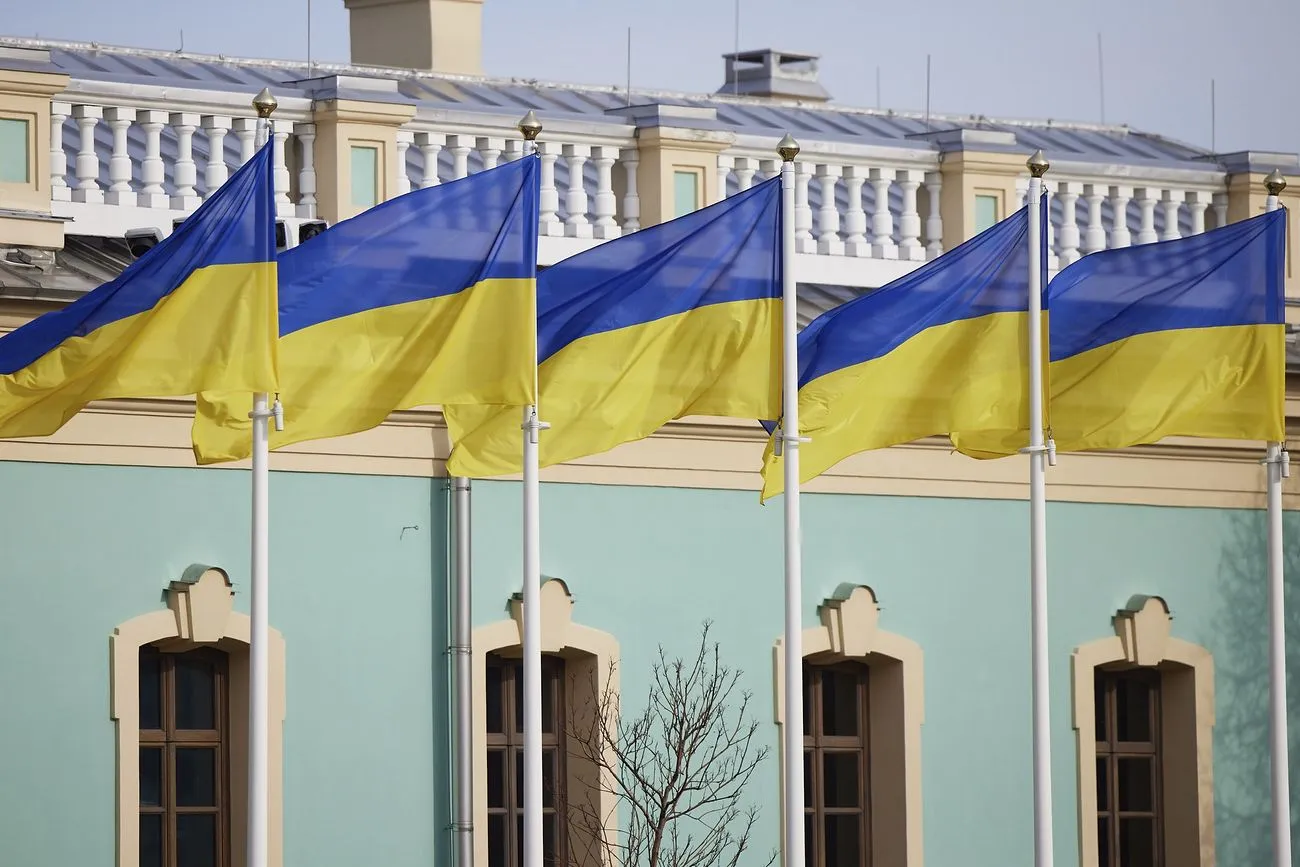
Ukraine's post-war reconstruction presents an unprecedented opportunity to transform the country into a global leader in green economy and environmental governance. As the country confronts the devastating impacts of Russia's invasion, strategic international investment and sustainable rebuilding efforts could create a pioneering model for future post-conflict development while accelerating Ukraine's EU integration. This transformation is happening alongside rapid developments in climate regulations in response to "ecocide" war crimes, which have created a unique convergence of reconstruction needs and environmental imperatives.
Three years into Russia's invasion, Ukraine faces immense economic challenges. According to the Ukrainian Government and UN's latest Rapid Damage and Needs Assessment, the total cost of reconstruction and recovery is estimated at $524 billion over the next decade—approximately 2.8 times Ukraine's estimated nominal GDP for 2024.1 Direct damage has reached $176 billion, with housing, transport, energy, commerce, and education bearing the brunt of destruction. The war has damaged or destroyed 13 percent of the total housing stock, affecting more than 2.5 million households.2
Despite these staggering figures, Ukraine's economy has demonstrated remarkable resilience, growing 2.9% in 2024 despite the pressures of war.3 Ukraine’s GDP growth had been highly negative throughout the political turmoil of the 2010s, experiencing a brief four-year growth period until COVID-19 stunted the economy. After the onset of the war, the 2022 GDP growth rate was an astonishing -28.8 percent.4 This resilience speaks to Ukraine's untapped potential and provides a foundation not merely for rebuilding what was lost, but for pioneering a new kind of economy—one that is greener, more innovative, and ultimately more competitive in the 21st-century global marketplace.
Ukraine's transformation into a green economic leader requires substantial international support. The IMF's Extended Fund Facility Arrangement has provided a critical anchor for Ukraine's economic program, with the country demonstrating strong performance despite exceptional uncertainty.5 The EU's reconstruction funding creates a framework for sustainable rebuilding that aligns with both Ukraine's needs and European values. As Berglöf and Rashkovan at the London School of Economics note, “The EU accession process and the conditionality involved in financing the restructuring effort will point the way, but the Ukrainian people must do the hard work of rebuilding trust in the political system and cleaning out the oligarchic structures in the economy.”6 However, this support now faces challenges with the Trump administration's shift in policy toward Ukraine. The freezing of U.S. military aid in March 2025 signals a potential broader reduction in American support for reconstruction efforts.7 The administration's preference for bilateral deals over multilateral efforts could fragment the coordinated international approach that has characterized support for Ukraine thus far.
Beyond direct government aid, private sector investment remains critical. According to assessments, the private sector could potentially cover a third of total reconstruction needs, providing an essential complement to public investment.8 This creates opportunities for impact-oriented investments that could yield both substantial returns and transformative effects.
Ukraine's path to becoming a green economic leader will require focused development in several strategic sectors where the country has inherent advantages and significant growth potential. Its vast agricultural lands, favorable wind conditions, and abundant sunshine create ideal conditions for renewable energy development at scale. The country could become not just energy independent but a net exporter of clean energy to the European grid, helping address EU energy security concerns while generating substantial export revenues.9 Untapped potential for bioenergy, hydro, solar, and wind generation, to name only a few, is immense. The UNECE reported in a 2023 press conference that these could “constitute the building blocks of Ukraine's future energy system, contributing up to nearly 80% of total energy generation by 2050.”10
This potential is enhanced by Ukraine's access to critical raw materials necessary for the green transition. The country possesses significant deposits of lithium, cobalt, titanium, and other minerals essential for renewable energy technologies and battery production.11 By developing these resources sustainably, Ukraine could position itself as a key supplier in green technology supply chains.12 Similarly, Ukraine's agricultural sector stands at a crossroads with transformative potential. The country's famed black soil has made it an agricultural powerhouse, but traditional farming methods have degraded soil quality and contributed to environmental challenges. A shift toward regenerative and organic farming practices could restore soil health, increase carbon sequestration, and produce premium food products for export markets.13 With an annual biomethane production capacity of 22 billion cubic meters, Ukraine could also become a leading supplier of agricultural biofuels to European markets.14
The war has forced Ukraine to innovate under extreme pressure, developing technical solutions for defense, healthcare, and infrastructure resilience with potential commercial applications. Ukrainian developers have created advanced drone technologies, telecommunications systems, and medical devices that could form the foundation for new industry clusters.15 Ukrainian developers have created advanced drone technologies, telecommunications systems, and medical devices that could form the foundation for new industry clusters in a post-war economy designed with sustainability at its core.
Despite the brain drain caused by the war, with an estimated 10% of researchers having left the country by late 2022, Ukraine clearly retains a strong base of technical talent, as this ecosystem of innovation demonstrates resilience and adaptability.16 The country still retains a strong base of technical talent that could be mobilized through strategic initiatives to retain existing researchers and attract returning diaspora members. Regional innovation hubs connecting universities, businesses, and local governments could be particularly effective in rebuilding Ukraine's scientific and engineering communities while simultaneously advancing the country's green transformation objectives. Soldiers who have been trained to use advanced artillery and drone technology would make highly effective workers in what could become a highly advanced and digitized economy.
Ukraine's environmental leadership potential extends beyond domestic economic benefits to include significant diplomatic and reputational advantages. The documentation of environmental war crimes—or "ecocide"—committed during the Russian invasion has positioned Ukraine as a potential pioneer in environmental justice on the international stage.17
This moral authority could be leveraged into economic advantage through participation in emerging green markets. Carbon markets represent a particularly promising opportunity for climate finance mobilization.18 Ukraine could develop carbon trading frameworks under the Paris Agreement, building on existing international partnerships.19 By developing high-quality carbon offset projects in reforestation, renewable energy, and sustainable agriculture, Ukraine could generate significant revenue streams while advancing its environmental goals.
Furthermore, positioning Ukraine as an environmental leader could attract premium foreign direct investment from companies seeking to enhance their ESG credentials. Corporations under increasing pressure to demonstrate environmental responsibility might view investments in Ukraine's green reconstruction as offering both financial returns and reputational benefits.20
Ukraine's potential path to green economic leadership faces substantial challenges. The ongoing conflict creates fundamental uncertainty that deters long-term investment. The EBRD's forecast of stronger 5.0% growth in 2026 depends on reaching an agreement to suspend fighting this year—a prospect that remains uncertain given Russia's continued aggression.21
The balance between immediate reconstruction needs and long-term sustainability goals presents another significant challenge.22 With millions displaced and critical infrastructure damaged, there is tremendous pressure to rebuild quickly, which may compromise sustainable approaches that require more planning and initial investment.
Financial constraints represent perhaps the most immediate obstacle. Despite substantial international support, the financing gap remains enormous—nearly $10 billion for 2025 alone.23 Governance challenges and corruption risks could undermine even well-funded green initiatives if not addressed systematically.24 Technical capacity constraints also pose challenges, as the war has led to significant brain drain among the professionals needed to implement complex green technologies.25
For strategic, forward-thinking actors, there are compelling reasons to invest in Ukraine’s future despite the risks:
- The scale of reconstruction means that early movers will have a significant influence on shaping Ukraine's future economy.26
- The alignment between Ukraine's reconstruction needs and global climate goals creates natural synergies, advancing multiple objectives simultaneously.
- While risks remain high, they are increasingly addressed through innovative risk mitigation tools, including political risk insurance and blended finance mechanisms.27
- Ukraine's EU candidate status provides a long-term institutional anchor that creates strong incentives for continued reform and alignment with European standards.28
Ukraine's reconstruction will not be a linear or finite process—it has already started and will continue throughout and beyond the war. By intentionally rebuilding with sustainability, circularity, and resilience as core principles, Ukraine can not only recover from war but leap ahead to become a model for 21st-century economic development.29
The green renaissance of Ukraine is not just about recovering from war; it's about seizing a historic opportunity to build a more sustainable and prosperous future for Ukrainians and serve as a beacon for post-conflict reconstruction worldwide. By channeling reconstruction funds via carbon credits and green finance, accelerating energy transitions, and restoring natural systems, Ukraine can create a win-win scenario—rebuilding its economy while contributing to global sustainability goals and accelerating its path to EU integration.
In a world facing both climate crisis and geopolitical instability, Ukraine's green reconstruction offers a rare opportunity to address both challenges through a single, coordinated approach. The question is not whether the world can afford to invest in Ukraine's green future, but whether it can afford not to.'
Endnotes
1. World Bank. “Updated Ukraine Recovery and Reconstruction Needs Assessment Released.” Accessed March 5, 2025. https://www.worldbank.org/en/news/press-release/2025/02/25/updated-ukraine-recovery-and-reconstruction-needs-assessment-released.
2. World Bank. “Assessment.”
3. GMK. “Ukraine’s Economic Development Dynamics Slow down in 2024,” 1739779236. https://gmk.center/en/infographic/ukraines-economic-development-dynamics-slow-down-in-2024/.
4. Data Bank. “GDP Growth (Annual %) - Ukraine.” World Bank Group. https://data.worldbank.org/indicator/NY.GDP.MKTP.KD.ZG?locations=UA.
5. International Monetary Fund. “IMF and Ukrainian Authorities Reach Staff Level Agreement on the Seventh Review of the Extended Fund Facility (EFF) Arrangement.” International Monetary Fund, February 28, 2025. https://www.imf.org/en/News/Articles/2025/02/28/pr25052-ukraine-imf-and-ukrainian-authorities-reach-sla-on-the-7th-review-of-the-eff-arrangement.
6. Berglöf, Erik, and Vladyslav Rashkovan. “Reconstructing and Reforming Ukraine.” LSE Public Policy Review 3, no. 1 (September 8, 2023). https://doi.org/10.31389/lseppr.95.
7. Stone, Mike, and Erin Banco. “How Trump’s Ukraine Military Aid Halt Affects US Defense Industry.” Reuters, March 5, 2025, sec. World. https://www.reuters.com/world/trump-halts-military-aid-ukraine-what-does-that-mean-2025-03-04/.
8. World Bank. “Updated Ukraine Recovery and Reconstruction Needs Assessment Released.” Accessed March 5, 2025. https://www.worldbank.org/en/news/press-release/2025/02/25/updated-ukraine-recovery-and-reconstruction-needs-assessment-released.
9. Katser-Buchkovska, Nataliya. “Ukraine’s Reconstruction Must Be Green, Inclusive and Technology-Driven.” World Economic Forum, December 2, 2022. https://www.weforum.org/stories/2022/12/ukraines-reconstruction-must-be-green-inclusive-and-technology-driven/.
10. United Nations Economic Commission for Europe. “Renewables Could Power Almost 80% of Ukraine’s Economy by 2050, Says UN Report,” June 21, 2023. https://unece.org/sustainable-development/press/renewables-could-power-almost-80-ukraines-economy-2050-says-un-report.
11. Middle East Institute. “Ukraine’s Critical Minerals and Europe’s Energy Transition: A Motivation for Russian Aggression?” Accessed April 11, 2025. https://www.mei.edu/publications/ukraines-critical-minerals-and-europes-energy-transition-motivation-russian-aggression.
12. Katser-Buchkovska. “Ukraine’s Reconstruction.”
13. Kravchenko, Y. S. , Q. Chen, S. J. Herbert, and X. Zhang. “Conservation Practices and Management in Ukrainian Mollisols .” Journal of Agricultural Science and Technology 18 (2016): 845–54. https://jast.modares.ac.ir/article-23-10365-en.pdf.
14. Katser-Buchkovska, Nataliya. “Guest Blog: Ukraine Should Be Plugged into Global Carbon Markets to Close a Funding Gap for Green and Sustainable Reconstruction.” TheCityUK, February 25, 2025. https://www.thecityuk.com/news/guest-blog-ukraine-should-be-plugged-into-global-carbon-markets-to-close-a-funding-gap-for-green-and-sustainable-reconstruction/.
15. CEPR. “Innovation for Economic Resilience: Strengthening Ukraine’s Human Capital and Science Sector,” February 11, 2025. https://cepr.org/voxeu/columns/innovation-economic-resilience-strengthening-ukraines-human-capital-and-science.
16. CEPR. “Innovation.”
17. “Ecocide in Ukraine – The Toxic Legacy of Russia’s War,” July 16, 2024. https://www.csce.gov/wp-content/uploads/2024/07/20240716_Helsinki-testimony-Final_Stakhiv.pdf.
18. Climate Finance Hub. “The Role of Carbon Markets in Boosting Climate Finance,” October 24, 2024. https://cfh.ghamfin.org/the-role-of-carbon-markets-in-boosting-climate-finance-for-low-income-countries/.
19. “EU Trade Relations with Ukraine,” March 7, 2025. https://policy.trade.ec.europa.eu/eu-trade-relationships-country-and-region/countries-and-regions/ukraine_en.
20. Holloman, Ellen, Jason Halper, Kevin Roberts, Sara Bussiere, Timbre Shriver, and Victor Celis. “‘Sustainable’ Companies Face Increased Pressure.” The Harvard Law School Forum on Corporate Governance (blog), December 26, 2021. https://corpgov.law.harvard.edu/2021/12/26/sustainable-companies-face-increased-pressure/.
21. “EBRD Revises down Ukraine’s 2025 Growth Forecast.” Accessed April 11, 2025. https://www.ebrd.com/home/news-and-events/news/2025/ebrd-revises-down-ukraine-s-2025-growth-forecast.html.
22. lbowen. “Reconstructing Ukraine at War: The Journey to Prosperity Starts Now.” Atlantic Council (blog), June 7, 2024. https://www.atlanticcouncil.org/in-depth-research-reports/report/reconstructing-ukraine-at-war-the-journey-to-prosperity-starts-now/.
23. World Bank. “Updated Ukraine Recovery and Reconstruction Needs Assessment Released.” Accessed March 5, 2025. https://www.worldbank.org/en/news/press-release/2025/02/25/updated-ukraine-recovery-and-reconstruction-needs-assessment-released.
24. International Monetary Fund. “IMF and Ukrainian Authorities Reach Staff Level Agreement on the Seventh Review of the Extended Fund Facility (EFF) Arrangement.” International Monetary Fund, February 28, 2025. https://www.imf.org/en/News/Articles/2025/02/28/pr25052-ukraine-imf-and-ukrainian-authorities-reach-sla-on-the-7th-review-of-the-eff-arrangement.
25. CEPR. “Innovation for Economic Resilience: Strengthening Ukraine’s Human Capital and Science Sector,” February 11, 2025. https://cepr.org/voxeu/columns/innovation-economic-resilience-strengthening-ukraines-human-capital-and-science.
26. World Bank. “Updated Ukraine Recovery and Reconstruction Needs Assessment Released.” Accessed March 5, 2025. https://www.worldbank.org/en/news/press-release/2025/02/25/updated-ukraine-recovery-and-reconstruction-needs-assessment-released.
27. Berglöf, Erik, and Vladyslav Rashkovan. “Reconstructing and Reforming Ukraine.” LSE Public Policy Review 3, no. 1 (September 8, 2023). https://doi.org/10.31389/lseppr.95.
28. International Monetary Fund. “IMF and Ukrainian Authorities Reach Staff Level Agreement on the Seventh Review of the Extended Fund Facility (EFF) Arrangement.” International Monetary Fund, February 28, 2025. https://www.imf.org/en/News/Articles/2025/02/28/pr25052-ukraine-imf-and-ukrainian-authorities-reach-sla-on-the-7th-review-of-the-eff-arrangement.
29. Katser-Buchkovska, Nataliya. “Ukraine’s Reconstruction Must Be Green, Inclusive and Technology-Driven.” World Economic Forum, December 2, 2022. https://www.weforum.org/stories/2022/12/ukraines-reconstruction-must-be-green-inclusive-and-technology-driven/.