Catastrophe Bonds: A Ticking Time Bomb?
Catastrophe bonds—the once underrated debt securities—have quietly become one of the most popular investment products in global finance. In 2024, the market hit a record of $17.7 billion, and just this year, there have already been $18.2 billion in sales, surpassing the total for all of last year. These bonds are high-yielding securities that transfer the financial risk of catastrophic events from insurers to investors. Designed as a shock insulator for rare natural disasters occurring in geographically isolated areas, this niche market enabled a novel risk-sharing mechanism: by spreading climate risks across different investors, no single insurer would bear the full cost of disaster.
Some might say it is a win-win situation. Insurers are able to offload risk from their balance sheets, while investors gain diversification benefits on their portfolios. With historically strong risk-adjusted returns—Morningstar reports estimate its sharpe ratio (measurement of risk-adjusted returns) to be twice that of Vanguard’s S&P 500—catastrophe bonds have swiftly risen to its status as one of the most popular investments in recent years.
However, the predictability of our climate that made these bonds appealing no longer exists. Cat bonds face a deeper, more structural problem: the models used to price these bonds were based on a world where the climate was stable. That world is now gone. And as the climate grows more volatile, the increasing risk might not justify the same return.
The crux of the issue lies in the modeling. Catastrophe models—probabilistic engines used to estimate the occurrence of hurricanes, wildfires, floods, and earthquakes—are reliant on historical climate data. Jake Weber, Elementum’s head of data and analytics, believes that these models remain “benchmarked to historical trends and not to today’s climate.” Previous events labelled as “hundred-year storms” now occur in the matter of several years.
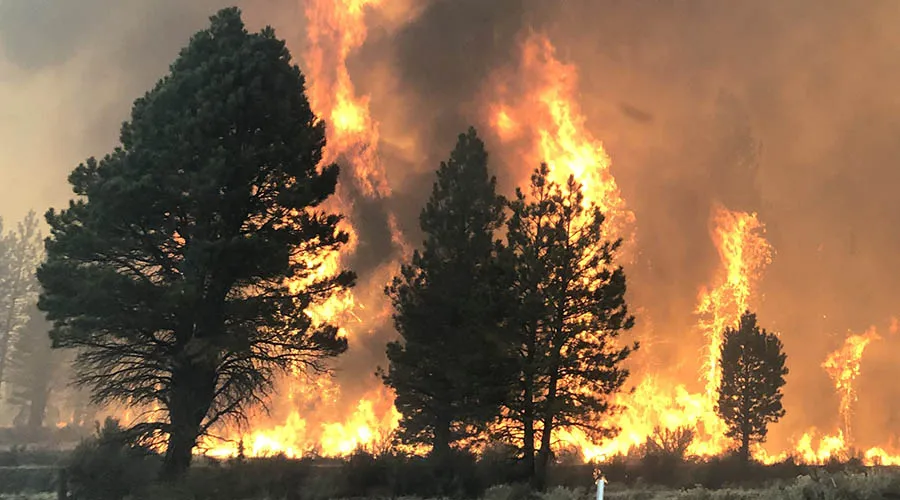
According to Climate Citizens’ Lobby, extreme fires, which are extremely large and destructive fires, have more than doubled over the last 20 years. Because these risk models are built on historical data on major catastrophes—which were uncommon—they rely heavily on assumptions and parameterizations. The sheer frequency of natural disasters are a reminder that perhaps these models are erroneous.
Economist Kenneth Froot warned as early as 2001 that the cat bond market has “systematic pricing errors due to limited capital and model risk.” That was before urgency regarding climate change was introduced. Today, model risk is no longer something theoretical. It is real and tangible.
Why does this matter beyond the world of insurance-linked securities? Because cat bonds are no longer a simple strategy of hedging risk for insurers. They have become crucial investments for both institutional and retail investors. Just in the span of five years, the market has grown by more than 75%. If climate risks are incorrectly measured at the nascent modeling stage then even retail investors like you and me, who entrust our money in financial institutions like mutual funds and pension funds, may be in a much riskier financial position than we think.
When climate shocks become correlated rather than isolated, there is a major economic danger. The traditional notion that catastrophe bonds assumes a diverse pool of risks of separate, isolated events is no longer true. In the present day, a European flood, a Californian wildfire and a Florida hurricane might occur all within the same time period.
This correlation is high risk. For instance, the La Nina, which brings dryness to the U.S. west coast, increases wildfire risk. Yet, the same effect also increases Atlantic hurricane activity. Climate change is making catastrophes more synchronized and frequent. A single year can produce several multi-billion dollar natural disasters. The mechanism which was previously used to spread risks ends up amplifying it.
For investors, the increasing difficulty to predict catastrophic events is a double whammy. Firstly, cat bonds no longer act as a portfolio diversifier which is uncorrelated to the market. Secondly, with higher risks incurred by insurers, this might be passed on to investors through lower yields offered. However, the impact extends far beyond portfolio performance. Should several cat bonds with large payouts get triggered, both insurers and investors are severely impacted. From an investor perspective, capital markets absorb losses on a scale they are not priced for. For insurers, they are suddenly under-hedged and with climate-related losses rising faster than premiums, they are forced to raise their premiums to avoid insolvency.
With fears from both investors and insurers, this might result in the tightening of credit conditions within catastrophe-linked financing. With tighter credit availability, the supply of loanable funds decreases. Should the market be significant, this could potentially result in potential defaults, resulting in less investment incentivization and slower economic activity.
In a way, mispricing at the micro level becomes instability at the macro level.
Catastrophe bonds were originally intended for a different climate regime, one where catastrophes were infrequent and largely independent. As the climate becomes more non-linear and unpredictable, models must incorporate recent climate data, correlated events, and update exposure parameters. Greater diversification across geographies and disaster types is also necessary to improve resilience and reduce concentration risk. For catastrophe bonds to remain viable today, we have to rethink the models that underpins these financial instruments.